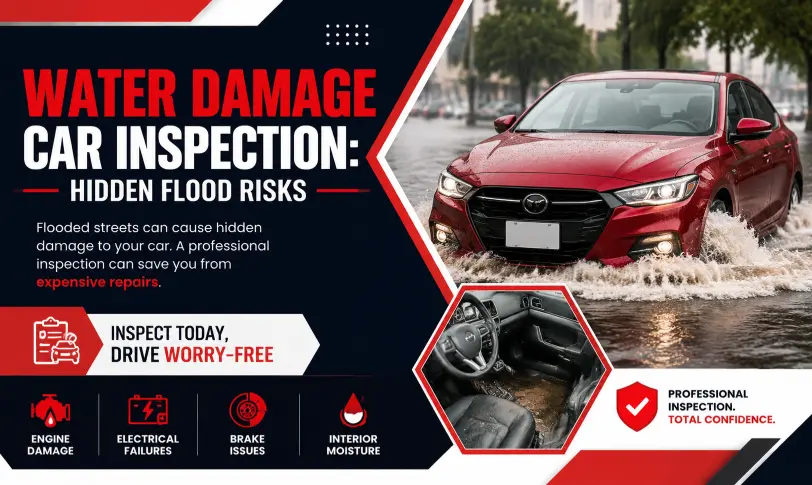

At the moment, it doesn’t feel like a big deal if the street you have to go through is flooded. The water appears shallow, and other cars are passing through. However, a water damage car inspection is important because flood damage can remain hidden inside your vehicle. You continue driving, reach home, park your car, and forget about the incident, while hidden problems may continue developing.
What you don’t see is what the water does as you drive through it. Damage caused by flooded waterways is not immediately visible. It seems to show up days, sometimes weeks, after the initial drive and when the connection is often forgotten.
The Engine: Hydrolocking
The worst damage to a car is definitely a hydrolocked engine. This occurs when water collects in the air intake pipe and gets to the cylinders. The bad thing about hydrolocking is that it most often ends up destroying the engine. The cost to repair the car is way too much. The moment the water reaches the top of the air intake, it is just another step to losing the engine entirely.
Do not attempt to restart your car if it stalls in flood water. This is when hydrolocking happens. Get out of the car and call for help.
The Electrical System: Delayed Failures
The great many wires, sensors, control modules, and electronics in modern cars are mounted somewhere protected until they get wet. The floodwater gets into areas that cannot hold water. This type of damage is caused by electrical water ingestion; corrosion takes days to form. Short circuits appear gradually. The sensors begin to report incorrect values. The ABS will not function properly, and the air conditioning system (AC) malfunctions.
The link between the flood and its connection to the other issues is not often made. If the module(s) were exposed to water, an OBD diagnostic scan is usually designed to show numerous stored fault codes.
The Brakes: Water Contamination
There are two problems with water in the braking system. The first one hinders the braking effect instantly due to loss of friction between the brake pad and disc. This is why your brakes lose power and become less effective right after crossing flooded areas. Usually, braking performance returns as the discs and pads dry out, but not necessarily.
Second and more important, brake fluid is contaminated (poisons), which decreases its boiling temperature. Brake fluid normally absorbs water with the passage of time (it is hygroscopic). This process is much quicker in the presence of flooding. Dirty brake fluids can vaporize during severe braking, which can result in brake fade at the worst possible moment.
Checking and changing the brake fluid is required if you’ve driven through extensive amounts of water.
The Transmission and Differential
While operating, automatic transmissions and differentials maintain fluid in and water out with seals and vents. If placed in water, these parts can force the water over the seals. Contaminated oil wears out much more quickly than clean oil and can cause damage to the inside of a cooling system.
During acceleration, signs of unusual noises arise. Typically, by the time they become noticeable, extensive internal damage has been done.
The color and condition of transmission fluid is a simple visual tool used to determine if contamination is likely the result of large amounts of water. Clear Transmission fluid should be red or pink. The fluid that leaks out could be brown or milky and have a burnt odor.
Hidden Moisture in the Interior and Floor
Water damage will infiltrate carpeting, seat foam, soundproofing, and floor padding. All of this is not readily apparent as the surface becomes dry. Damage is still occurring under the carpet from the moisture. Mould and mildew grow within days in Pakistan’s humid climate. Corrosion of the electrical connectors under the seats and under the dashboard. A car’s odour after a flood is a slow process, and it’s hard to get all of the foul smell from the vehicle.
Water Damage Car Inspection Checklist After Flooding
The inspection is especially crucial when it comes to selling or buying a car in the months following the monsoons. One of the most prevalent hidden damages in Pakistan’s used car market is flood damage. A professional water damage car inspection helps identify hidden issues such as electrical failures, engine problems, brake contamination, and moisture damage before they become expensive repairs.
The FameWheels inspection service takes the time to examine all of these checkpoints and provides a documented car condition report.
Conclusion
Flooded streets result in hidden damage that becomes costly later. Standing water can damage cars through electrical failures, brake contamination, transmission wear, engine “hydrolocking,” and interior mold. A professional water damage car inspection can determine what the water did to your vehicle and help prevent expensive repairs in the future.