
When it comes to purchasing a used Japanese car in Pakistan, the process isn’t merely an auction win and shipping arrangement anymore. In Pakistan, a pre-shipment inspection for a vehicle might be required before it can even be exported under the new import compliance guidelines set for 2026. Even the listing photos might look ideal, but if it fails to meet the requirements, it may not get the certification required to export to Pakistan.
The change comes in the wake of the amendments made in the Import Policy Order by the Pakistan Ministry of Commerce by SRO 61(I)/2026. If you are a dealer, an importer, or a private buyer, you can no longer remain clueless about what PSI owner is all about.
So, what is Pre-Shipment Inspection?
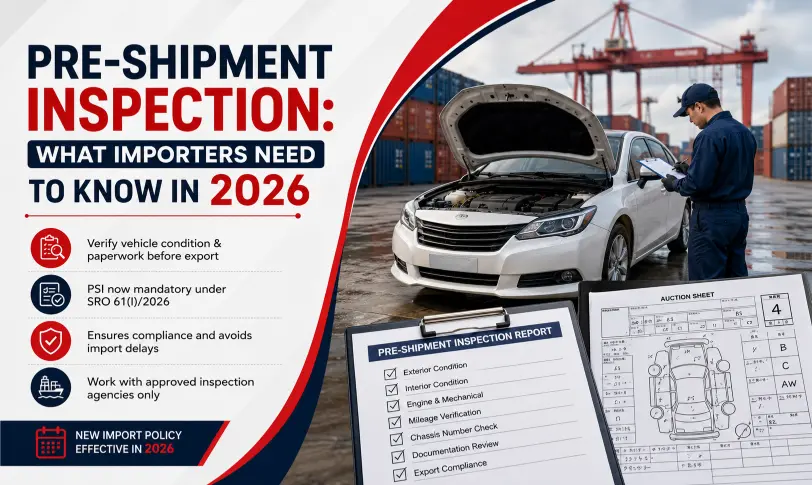
Pre-shipment inspection (PSI) refers to the verification process that occurred in the exporting country before the vehicles were shipped into Pakistan. It’s meant to verify the dealer or auction house’s claims with the actual condition and paperwork of the vehicle.
A basic PSI will include the following:
- Inspecting the overall health of the vehicle is required.
- History of accidents and repairs verified.
- Inspecting the auction sheet and the vehicle for cross-references
- Mileage and chassis number validation
- Export compliance review
Why Has PSI Become More Important in 2026?
The surge in PSI marks a more concerted Pakistani strategy for the import of used cars. The government has been pushing for stronger compliance due to documentation issues, auction grades being misdeclared, and disputes over vehicle conditions after arrival.
The three popular methods of bringing cars into Pakistan from abroad, namely the Personal Baggage Scheme, the Transfer of Residence Scheme, and the Gift Scheme, have been specifically revised in SRO 61 (I) 2026. If PSI is applicable to one of these schemes, then those vehicles not meeting the inspection and documentation requirements will be ineligible for export.
This translates literally to the fact that the old system of just taking the auction grade/word on board is no longer accepted. Valid condition reports and documentation are immediately becoming essential components of the approval process for a shipment.
What was meant by SRO 61(I)/2026?
The revised framework of enforcement will be applied more strictly for PSI compliance for vehicle types for which PSI is applicable. The bodies issuing inspection certificates shall be the bodies recognised by Pakistan’s conformity assessment system. You should verify that the agency you want to use is approved in place and will be allowed to do inspections before your booking, as customs clearance will not accept certificates from non-approved agencies.
A vehicle may get stuck in the certification process in Pakistan and face compliance issues due to a lack of or missing inspection reports. The duty to ensure this is done correctly falls on the importer, not the seller/shipping agent.
Another point to note is that the specifications set forth may differ according to the category of the vehicle. Before buying and arranging shipment, importers should check the PSI requirement that is applicable to their type of vehicle.
The Auction Sheet is relevant, but it isn’t sufficient
JDM market auction sheets are still one of the most important data sheets used in JDM import. These include structured grading and condition data that will give buyers an overall overview of a car before buying. The following is an example of what a sheet of auctioning should look like:
- Vehicle Grade (typically 3-5, including R repaired).
- Accident and repair indicators
- Structural condition remarks
- Mileage and chassis records.
- Interior/exterior condition codes
What Smart Importers Should Do Before Any Purchase?
So importers should do the following before they confirm the JDM and arrange shipment.
- Firstly, see if PSI is mandatory for the type of vehicle you are importing. The framework has been updated, so the rules that applied in previous imports should not be assumed to be true now.
- Second, ensure that the inspection body in question is currently acceptable according to the rules of compliance in Pakistan. This must be checked before the inspection and not after.
- Third, verify the verification report with the auction sheet’s authenticity and confirm the details. One of the most frequent causes of delays is the differences between vehicles and documents.
- Fourth, consider low-risk vehicle categories that are not R-grade or given a flood damage indicator, no matter the price. If the price of the problem vehicle is low, the sum of shipping cost, duties, and repairs will be very costly.
Finally, in case you feel some of the documentation is missing or incomprehensible, take a break prior to transferring money. When an issue appears after delivery, these expenses are typically high.
The Bigger Picture for Importers
The used car importing industry in Pakistan is making steps towards transparency and accountability. Part of that change is the PSI requirement as mandated by SRO 61(I)/2026, which stresses the confirmation of vehicle condition and documents that occur before shipment, as opposed to after.
Importers will have a higher standard of due diligence and have greater protection. A proper PSI is a documented car that can result in a resellable car and eliminate surprises in the future regarding condition. If buyers are buying through a dealer, it is a good idea to enquire if a PSI certificate is available and who issued it.
Conclusion
Now, vehicle pre-shipment inspection has become a mandatory stage in the import procedure in Pakistan. SRO 61(I/2026 clearly states that the requirements for exporting a vehicle to the Province are that it should undergo inspection and documentation according to prescribed standards. A smooth import depends on the use of a recognised inspection agency, complete and consistent documentation, and understanding what the auction sheets really mean. Now, users who intend to import vehicles in 2026 will start with PSI compliance.