
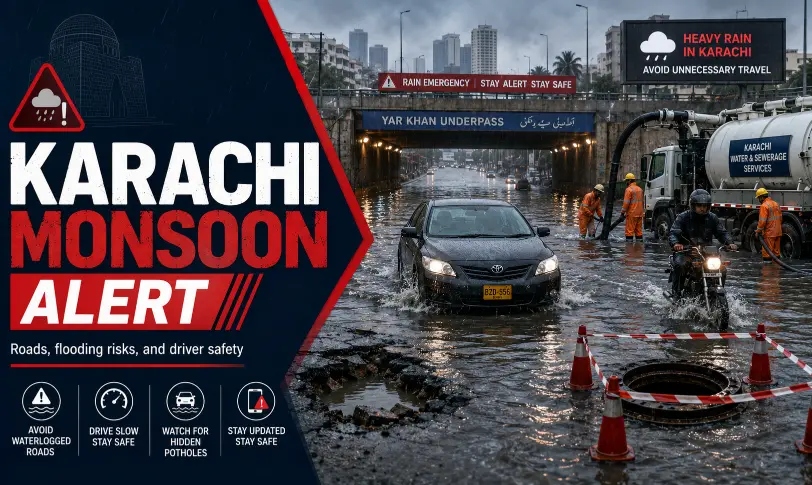

The rain is anticipated to be widespread in Karachi from July 18 to 25, 2026, according to the Pakistan Meteorological Department. On July 14, Karachi was put under city-wide high rain alert. The WAPC has deployed its jetting and suction machines on standby, instructed field staff to stand guard throughout the forecast period along established roles, and also has activated its emergency drainage operations.
The words sound comforting when you recall past episodes of serious monsoon rains in Karachi. The underpasses became swimming pools, and wastewater containing sewage was discharged into buildings and residences. Last year, there were at least 8 people who died during a single downpour from electrocution, drowning, and structural collapse. The maximum drainage capacity of the city’s drainage system is 40mm of rain. Everything else, Mayor Murtaza Wahab himself said, will spill over into flooding.
The Infrastructure That Has to Handle What Is Coming
The drainage and sewerage system in Karachi is old, small, and compromised even before the rains. The current system was built decades ago to cater to a considerably smaller city. Over 16 million people live in Karachi now, and the city has a sprawling urban footprint that has outgrown any associated infrastructure planning.
Potholes and utility excavation not only make roads unsafe, but after years of neglect, they become even worse when they’re wet. Standing water causes damaged asphalt to degrade more rapidly. Where potholes existed before, they now become concealed by the surface and are a great threat to vehicles and motorcycles. When roads are flooded, open manholes, which have claimed the lives of 27 people in Karachi in 2025, go out of sight. It is not only inconvenient to drive through a flooded street in Karachi. It’s a potential safety threat and a liability to you and your car.
What the Authorities Have Prepared?
This is the monsoon forecast come true at KMC. Given the Mayor’s directives, KWSC Chief Executive Officer Ahmed Ali Siddiqui sensitized all operational personnel and directed continuation of drainage operations without any interruptions for the forecast duration. Senior engineers at various levels have been ordered to personally manage the project in the field. Special efforts are being made to pre-position extra machinery and human resources in flood-prone and low-lying areas of Karachi ahead of the rain.
KMC Parliamentary Leader Karamullah Waqasi said all the municipal bodies are under tight watch, and a coordinated emergency response strategy has been framed city-wide. Please do not take off the manhole covers during rainfall; do not enter water-soaked areas on foot; and please cooperate with rescue personnel.
Why do Karachi’s Roads Make Every Storm Worse?
A city with a good drainage system and well-maintained roads has functional systems. However, in Karachi, roads are broken and in bad condition.
In Karachi, there are Open excavation areas, particularly roads with broken surfaces, that form natural water traps. Clogged with construction debris and solid matter, blocked drains can still not carry water well even if they are not overblocked.
Utility companies, including the Sui Southern Gas Company, have left the excavation work on major roads in the state most susceptible to monsoon damage. Previously impassable sites can become seriously dangerous when wet.
Practical Advice for Karachi Drivers This Monsoon
Certain points can be taken seriously if you are driving during or immediately after heavy rain in Karachi.
Never cross underpasses during or after heavy rainfall. They fill up rapidly, and when driving through water, vehicles can be very difficult to get out of safely. If it cannot be seen through, do not drive through standing water. An open manhole or a deep pothole filled with water can cause severe damage to your vehicle or worse.
If your car stalls in floodwater, do not attempt to restart it immediately. Ingestion of water from the air intake can lead to total engine failure. If the water level is rising, get out of the car and move to higher ground. If you have insurance, file an insurance claim.
Check the air filter, brakes, and underbody parts of the vehicle before the onset of monsoon. All of the above types of water damage are common repair problems in Karachi after monsoon; however, all of these can be avoided with timely maintenance.
Conclusion
Karachi’s authorities have gone into overdrive in preparing for the week-long rain forecast, which they are betting on. However, no amount of emergency deployment can make up for failing to maintain infrastructure prior to the crisis. The roads were already broken. The drains were already leaking. The monsoon does not cause these issues; they are local problems. This is a test the city of Karachi never seems to pass, until they rebuild the infrastructure instead of patching.