
As EV adoption in Pakistan accelerates, the increase in EV battery-related fires has sparked concerns about the safety measures and battery quality in this country’s EV market. With the government’s call for electrification in order to cut fuel imports, the gap between policy targets and safety monitoring has increased:
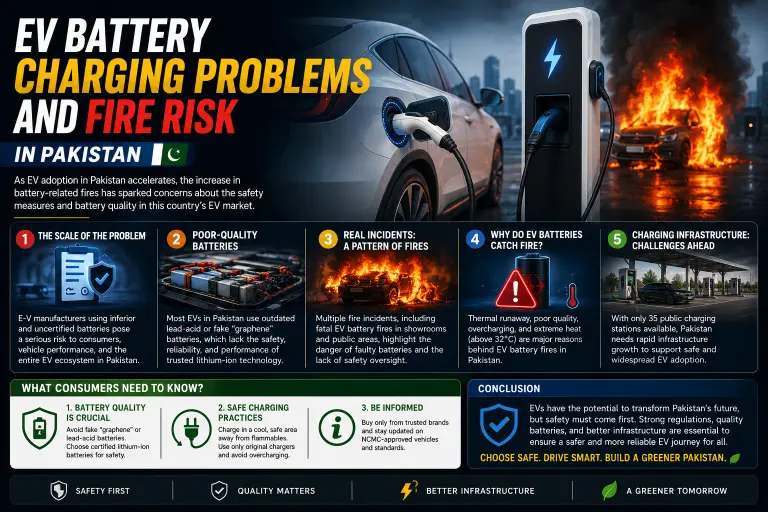
The Scale of the Problem: Pakistan’s EV Battery Fire Crisis
The matter became prominent when the National Coordination and Management Council (NCMC) exposed some electric vehicle (EV) manufacturers using inferior and faulty batteries in Pakistan. In a meeting of the executive committee, the NCMC stated that many manufacturers were not following the prescribed standards of quality and safety.
The council highlighted the danger of uncertified battery systems for consumers, vehicle performance, and the reliability of the EV ecosystem as a whole. In a recent Senate standing committee meeting, it had again been pointed out how serious a problem lithium batteries are, and that the risk of fire from the batteries is higher.
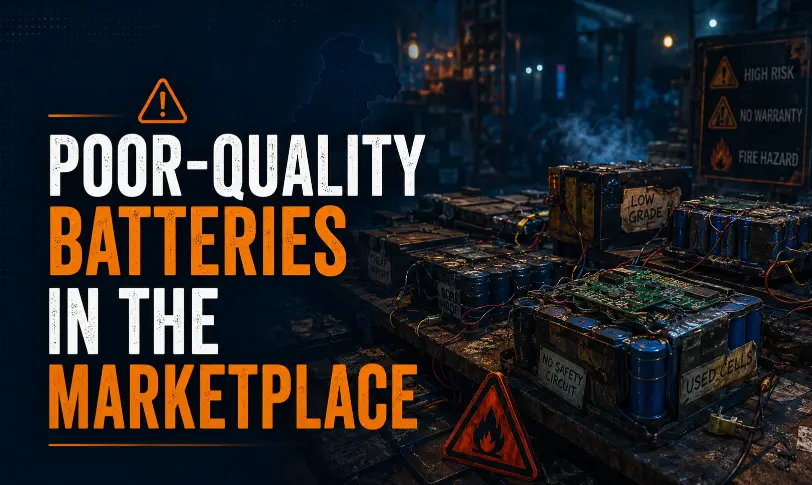
Poor-quality EV Batteries in the Marketplace
What has been observed so far is that EV’s in Pakistan are manufactured using old and unsafe battery technologies. Pakistan Automotive Manufacturers Association (PAMA) has pointed out that almost 90% of the electric bikes in Pakistan are old, which is causing a great safety threat.
The electric vehicles in Pakistan are mostly lead-acid batteries with a thin layer of graphene on them, which PAMA says is ” a deceptive marketing trick”. Despite not being commercially available anywhere in the world, these batteries are frequently sold as “modern graphene technology”. They don’t have the safety and reliability of trusted lithium-ion batteries in foreign EV markets.
The government has instructed the Engineering Development Board (EDB), in partnership with the NEECA, to establish a stringent inspection, testing, and verification process for compliance with quality and safety requirements.
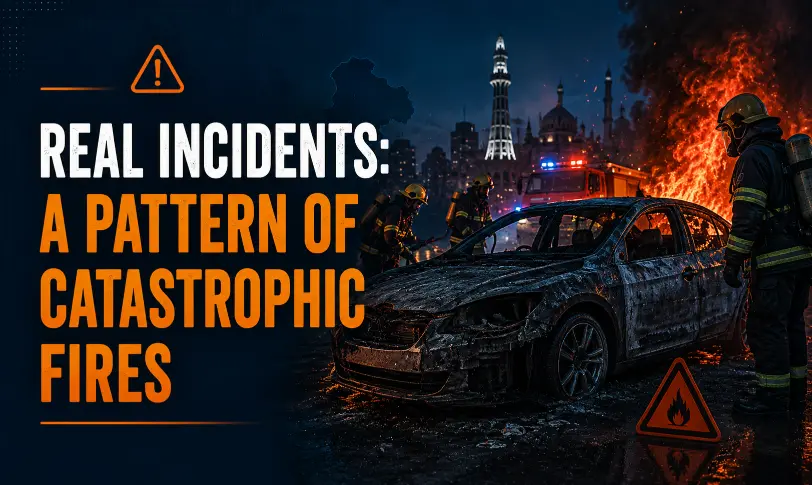
Real Incidents: A Pattern of Catastrophic Fires
The issues raised by the government are not hypothetical. Pakistani citizens who are travelling in foreign countries and have witnessed several serious incidents say that widespread dangers are posed by faulty batteries.
However, the incident in Karachi port is what sparks the terror. Those are an “emerging challenge” for firefighters, Rescue 1122 officials said, because such batteries can generate a fire spontaneously at certain temperatures. They also remembered what happened to a luxurious EV battery that ignited at a Defence Housing Authority (DHA) showroom and killed 2 women and injured several others.
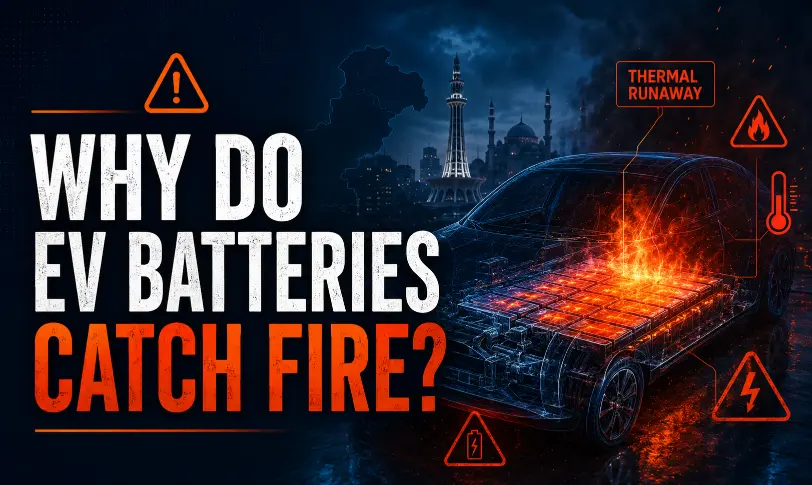
Why Do EV Batteries Catch Fire?
The most common type of battery for modern EVs, lithium-ion batteries, is vulnerable to an effect known as “thermal runaway.” This can be caused by defects in production or too much usage.
Global data shows that thermal runaway events are not confined to the initial period: 10.86% occurred within 0-5,000 km, 6.95% at 5,000-10,000 km, and 61.84% beyond 20,000 km. Importantly, 38.55% of the cases were reported while vehicles were parked and powered down, 30.43% during charging, and 21.82% during driving.
This is largely due to the hot climate in Pakistan. Senator Talha Mahmood observed that for lithium batteries to be used, the temperature should not exceed 32 degrees Celsius, which is often the case in Pakistan. If these batteries are also of poor quality, the effect of extreme heat and poor materials is a recipe for trouble.
Problems and Progress in Charging Infrastructure
Adopting EVs in Pakistan is not just about battery quality; there are other challenging aspects of charging. The industry seems to be drawing attention to the fact that there are only 35 public charging stations in Pakistan. The government is trying to expand this program to 6,000 EV charging stations across the country.
What Consumers Need to Know?
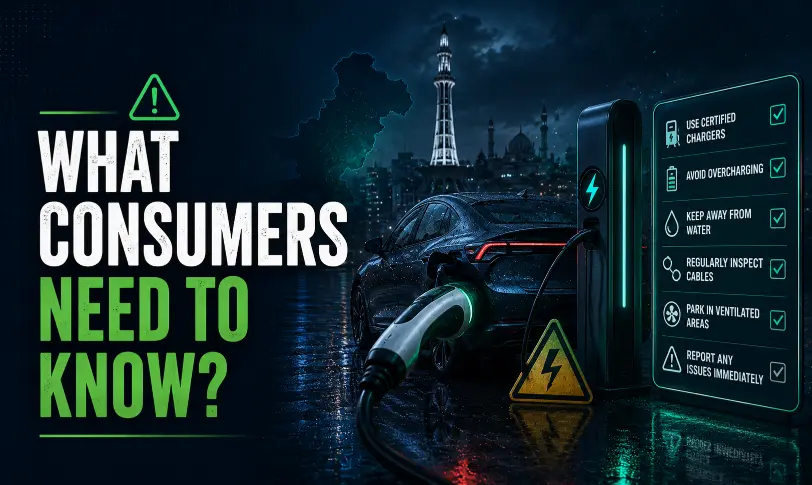
1. Battery Quality is of paramount importance: Be wary of “marked up” marketing. Batteries labeled “Graphene” or something similar are usually coated lead-acid batteries. Please buy genuine lithium-ion batteries that are certified safe.
2 Safe Charging Practices: Charge only at night or in the daytime, in a location away from flammable materials, using only the manufacturer’s charger, and cool batteries before charging after riding in hot weather.
3. Be Informed: Watch for cars that meet the quality testing processes stipulated by the NCMC when regulations are put in place.
Conclusion
Affordable green mobility is at a crossroads in Pakistan. In present-day conditions, with low-quality batteries and inadequate charging stations, Pakistanis are struggling to adapt to EVs. We know that electric vehicles have huge potential for lowering fuel expenses. However, they pose intolerable safety problems. The government has correctly identified the problem and is taking steps to increase regulation. The shift to safer cars, however, will be a gradual process. Consumers should be responsible for making decisions to reduce the risk of battery fires.