
Salvage cars and repairable cars are often confused, especially when purchasing vehicles through auctions or import sources. However, understanding the difference is essential because the vehicle’s title, insurance, resale value, safety, and repair costs may be affected.
What Are Salvage Cars?
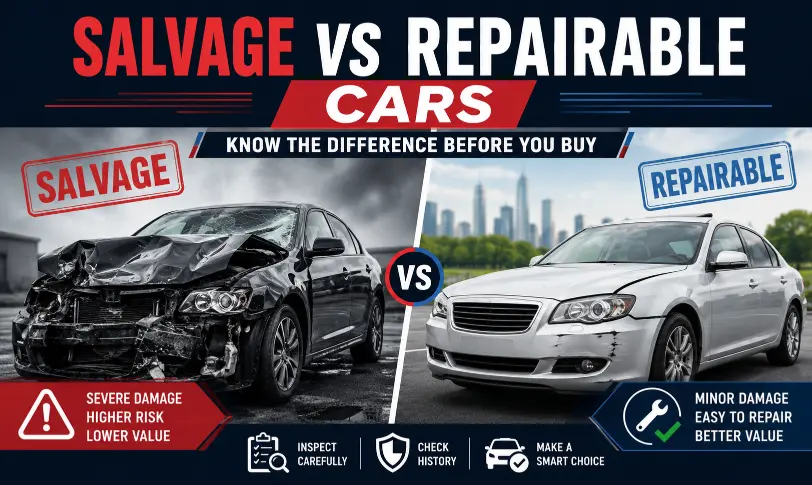
A vehicle that an insurance company deems a total loss is referred to as a salvage car. It occurs when the cost to repair the vehicle is more than 75% to 80% of the value of the car in the marketplace. The insurance company files an insurance claim, pays the car owner, and resells the car at a salvage auction to cover its costs.
There are sometimes salvage cars that are working perfectly fine. The Insurance Company merely concluded that repairing the vehicle was not cost-effective. They might have significant structural, flood, or fire damage, and the repair work is actually very difficult.
If a car is given a salvage certificate, it remains salvaged. The vehicle still has a rebuilt or reconstructed title even if it has been repaired. This impacts the insurance, the resale ability, and financing for the remainder of the car’s life.
What is a Repairable Car?
A damaged vehicle that isn’t classified as a Total Loss (TL) is a car that can be repaired. Damage is claimed, but repair costs are not past the insurance level. After proper repair and maintenance, the vehicle retains the same title and can be insured and registered.
Most cars that can be repaired are easy to categorize when it comes to the damage type. Front damage includes any damage to the bonnet, bumper, headlights, and radiator. All the rear lights and the rear bumper and boot are involved in rear damage. Body parts and doors can be dented. Repairable vehicles are much easier to insure and resell since the damage is documented and the car isn’t written off.
Who Buys Salvage Cars?
Different buyers are interested in salvage vehicles. These are bought by exporters and sent to destinations where cheap labour allows the repairs to be made. That’s why Pakistan imports salvage vehicles from the UAE, Japan, and the United States of America. When the price is affordable, mechanic and repair shops with trained teams can still make use of salvage lots. Parts dealers purchase used cars to tear down for parts, not repair the entire car itself.
A salvage car is a riskier vehicle for the middle-class buyer. He requires professional inspection and a concrete roadmap for repairs to put up any financial stake.
Why Repairable Cars Can Be a Smart Buy?
If a car has been in an accident but is still repairable with helpful documentation and a clean sheet of registration, this may be a true value. There is damage, it won’t cost too much to repair, and the car won’t be a title change. A vehicle that has minor damage to its bumper as a result of an accident is a completely different deal than a vehicle that’s been in a flood and may not even look damaged from the outside.
The important word to recognize there is a proper repair. This is the place where many buyers in Pakistan make costly errors. A hidden liability is a car that is not structurally and mechanically restored but cosmetically restored. Paint hides a lot. If you do not involve a professional inspection.
Things to Look for Before Purchase
You can only consider a salvage or a repairable car if you have a professional inspection report. The paint depth gauge identifies panels painted on to cover the problem. A chassis inspection can spot structural problems that you can’t see.
FameWheels inspection service tests more than 200 checkpoints and gives you a detailed digital report before you make any commitment. In the case of damaged cars, this is the sole basis for deciding on a sustainable purchase.
Conclusion
Although the terms are used interchangeably, salvage and repairable cars are not synonymous. A salvage title carries higher risks and remains permanently branded. Buyers should approach salvage cars carefully because hidden structural, electrical, flood, or fire damage can make them expensive and unsafe to restore. If a car is repairable and the price accurately reflects its condition, it may still be a good purchase. In either scenario, an independent professional inspection is essential to determine what you are actually buying.