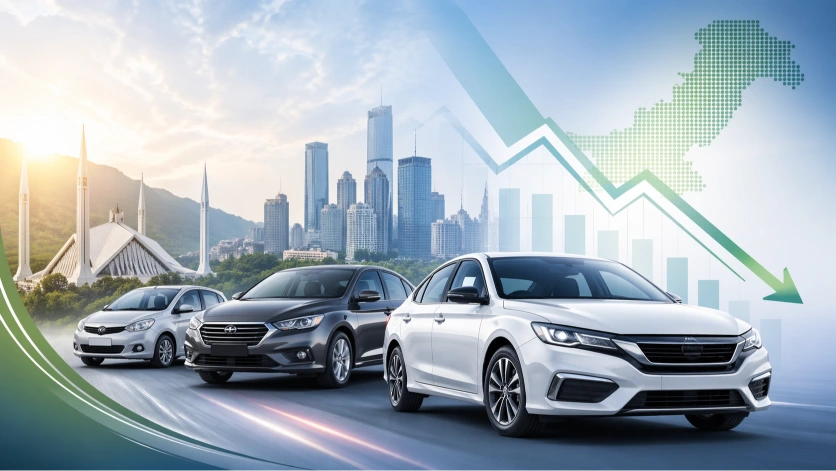

Assuming that you have been hesitant in purchasing a car due to its perceived high cost, this is some truly good news. Pakistan has negotiated with the IMF to implement a new five-year auto policy, which will gradually lower vehicle import tariffs. To put it plainly, cars may become cheaper in the coming couple of years. Let’s now find out what exactly is changing and how it impacts you.
What is This New Auto Policy?
The government of Pakistan has signed an auto sector policy with the International Monetary Fund under the 7 billion bailout program of the country. The policy will aim at reducing the tariffs on imported vehicles gradually within the next five years. Moreover, the policy will be helpful in making cars affordable for the Pakistani population. The policy will become effective starting July 1, 2026, and will last until 2030.
The Timeline of Change
The following is a vivid timeline of the tariff changes under the new policy:
| Year | Weighted Average Tariffs | Key Change |
| Current (2026) | 10.6% | Baseline tariff rate |
| 2026-27 budget | 9.5% | First reduction step |
| 2028-29 | 7.4% | Further reduction |
| 2030 | 6% | Final target rate |
| 2030 | 40% regulatory duty on used imports | Brought to zero |
The government has also signed a consensus that no new regulatory duty will be placed on imports in the future. It is an important commitment that makes importers and buyers more certain as to future costs.
The New Tariff Structure
The current tariff regime of the auto industry in Pakistan is complex. But the new policy will substitute all that with only four plain slabs:
- 0%
- 5%
- 10%
- 15%
The duty on fully assembled vehicles (fully assembled imported cars) will be limited to 15 percent within the next five years. In addition, further customs duties and regulatory duties will be phased away by 2030. This shortcut eases the system for both the importers and buyers.
What of Used Car Imports?
This is what becomes of great interest to the market of used cars. At the moment, a used vehicle importer is charged a 40 percent regulatory duty. It is a huge price that is directly transferred to purchasers and is one of the primary causes of the high cost of imported used cars nowadays.
This 40% duty will be phased out under the new policy, which will be mentored to eliminate it by 2030. Thus, used foreign cars, such as well-known Japanese models, will get cheaper over time, once the duty is decreased every year.
What Does This Imply for Local Car Buyers
Short-term prices will not decrease overnight. The modifications occur over a period of four years. But, in this case, the buyers may expect:
- Increase in imported car choices with a decline in tariffs and the ability to support imports.
- Slowly increasing price cuts on imported cars, along with a decline in duty.
- Additional rivalry to local manufacturers, which may drop prices of locally built cars as well.
- Ease in the process of buying since the tariff system will be more transparent.
In addition, the government states that it is also to facilitate local production and localize parts. So it is not merely a policy of imports, but the local assemblers are forced to become more competitive and efficient.
Will Local Cars Become Cheaper Too?
The high importation duties now favor local manufacturers such as Toyota, Honda, and Suzuki against the outside competition. When those responsibilities fall, they will feel more pressure to maintain their prices.
In addition, when imported cars become cheaper, they would have no option but to retaliate against local assemblers. Thus, the new policy might indirectly lower the prices of cars assembled locally as well, although this might take a little longer to be reflected in the market.
Conclusion
The new auto policy of Pakistan represents a true change of direction for car buyers. A decrease in tariffs, an easier system of duty, and the ultimate removal of the 40% regulatory duty on used imports all spell cheaper cars in the years to come. But it will take time; these changes will be implemented over 2030. Then, in case you are intending to purchase a vehicle any time soon, it is worth watching the progression of the policy post-July 2026. The phase of slightly lower cars in Pakistan is approaching. Only a question of time.