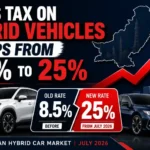
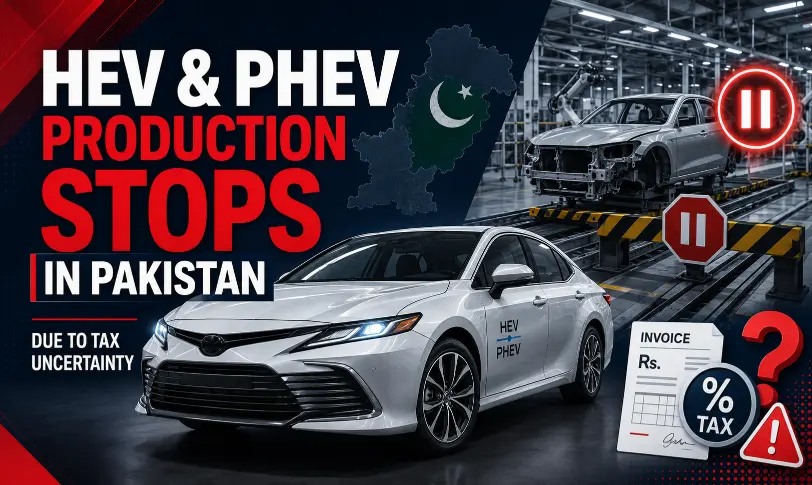

Pakistan’s hybrid vehicle industry is facing a serious issue. On July 1, 2026, the following automotive manufacturers have suspended production of Hybrid Electric (HEV) and Plug-in Hybrid Electric Vehicles (PHEV) and placed a freeze on invoicing of already booked units. The truth is no one at the moment knows exactly what the sales tax rate will be, and manufacturers aren’t ready to provide an invoice until they do.
This is not a minor administrative delay. It is a total production and delivery pause that is affecting the entire vehicle supply system from carmakers and dealerships to vendors, and thousands of customers who have already paid for their vehicles.
What caused the production stop?
The lower sales tax rate for hybrid cars officially ended on June 30, 2026. In the previous policy, most of the PHEV HEVs were charged at 8.5% GST, whereas the models with engines above 1,800cc were charged 12.75%. These rates are part of the Auto Industry Development and Export Policy 2021-26 that ended on June 30 without extension and without a replacement policy.
In Pakistan, the plain tax structure allows engines with more than 1,400cc or priced above Rs. 4 million to be at 25% GST. As essentially all hybrid cars (HEV and PHEV) can be classified as one of these types, then 25% of them might be classified for now. The trouble is that there is no official word from the government. It has also not confirmed any new hybrid-specific fees. So what we have is a tax law reading and not a policy; it’s sufficient to freeze the entire process, from production to invoicing.
Why Manufacturers Cannot Simply Continue?
At the heart of the crisis lies the invoicing issue. The rate of tax that a manufacturer includes in an invoice for a vehicle is the officially mandated rate of tax. They will be hit with a substantial tax bill if they submitted invoices based on 8.5% and the government decides to change rates in the years to come to 25%. If they offer 25% when the government announces 18%, customers will want the balance of 7% refunded, and their confidence in the brand will decline.
As part of the new auto policy, implementing an 18% sales tax rate for hybrid vehicles is under consideration, industry sources say. But that policy is now due for August 2026, and the production and invoicing freeze may have to continue for another month or so. There’s no official announcement for when this will actually occur.
There is not yet a legally safe way for manufacturers to calculate the appropriate GST to be charged until a formal notification is given. So until then, the best course of action is to pause and wait.
Who Is Actually Affected?
Hybrid Customers are facing delivery delays with no time frame. Most realize that it is a policy problem, but that does not explain the frustrations of those who sold off their old car in anticipation of getting a new one shortly.
As a dealership has no control over the situation, it cannot update inventory, anticipate delivery dates, or effectively deal with customer complaints. For the hybrid side, showroom activity has come to a standstill.
Since production costs are passed on to users without being converted to revenue, manufacturers are at a loss. The production plans are postponed, orders for parts are not released, and staff can’t be scheduled for when business will resume.
A Gap That Should Not Have Existed
The carryover criticism from experts in the field is not for the amount of the tax but, instead, for the timing. The eventual close of the AIDEP 2021-26 concession was anticipated months ahead of schedule. The issue over a replacement framework for the manufacturers had been on people’s minds for months up to 30 June. Everyone in this industry was hoping that a new tax policy for hybrids would be issued before the concession’s end, not after its production end.
Thus, it began in July 2026 with no framework, and everyone from the factory to the end consumer is feeling the effects now. Automotive industry advocates point out that this lack of clarity is costly and stresses operations from upstream to downstream.
What Happens Next?
The upcoming revision of the automotive policy is expected to bring an 18% GST for hybrid cars, falling between the now-expired 8.5-12.75% concessional tax rate and the standard 25% tax rate. If an announcement is made in August, it will give manufacturers the legal clarity to continue production and clear the invoicing backlog.
As the announcement is made sooner, the recovery period will be shorter. If the delay lasts into September or longer, customers’ trust in the hybrid car segment could be lost forever. They could shift towards petrol cars or EVs, where prices are more predictable and stable.
Conclusion
The stop in the production of HEVs/PHEVs in Pakistan is a policy-made issue that needs a policy solution. The government knows what it needs to do, has the mandate, and the general agreement of the industry to announce a new hybrid tax. A delay in that announcement would mean more disruptions to a part of the country’s car market. For the time being, the customer and the manufacturers are waiting for August.