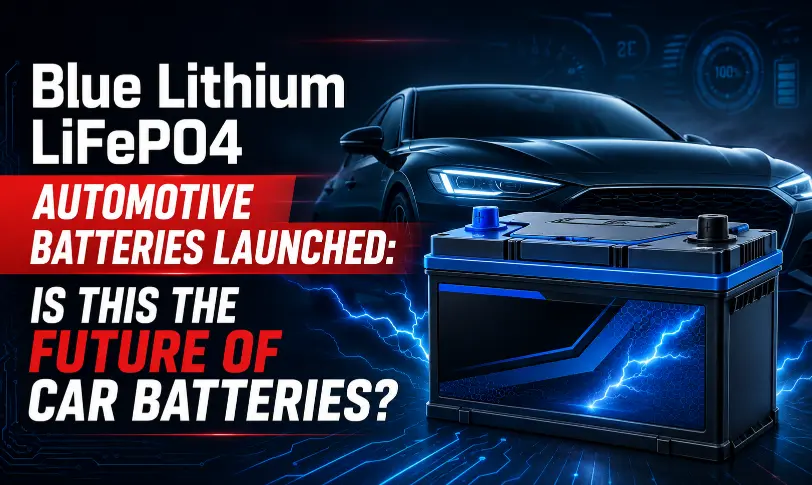

Blue Lithium LiFePO4 Automotive Batteries are entering the automotive market as a next-generation alternative to traditional lead-acid batteries. Launched in the Philippines by Power4All, these lithium-based car batteries aim to provide longer lifespan, faster charging, improved efficiency, and reduced maintenance. It was released in the Philippine market by Power4All.
Let us discuss the future of car batteries and their significance in today’s world.
Why LiFePO4 Automotive Batteries Are Changing Car Battery Technology
Lead-acid batteries have been in cars for more than 100 years. They’re working, cheap to make, and mechanics know how to fix any problem regarding them. However, they do have their limits. They weigh a lot and have a relatively short lifespan, usually 2-3 years before replacement is required. They lose considerable storage ability in cold conditions.
Most of these limitations are directly overcome by using LiFePO4. The chemistry is more energy dense, so the same size and weight of the cell will deliver more energy or power. It will allow full discharge without the permanent damage that causes battery death in the lead-acid battery. Additionally, it charges faster. It is also suitable for a broader temperature range of operation.
Blue Lithium says its units last for up to 10 years. This would equal replacing three to five standard lead-acid batteries over the same period of ownership.
How LiFePO4 Automotive Batteries Work in Blue Lithium Systems
All Blue Lithium batteries feature LiFePO4 chemistry cells complementing their built-in Battery Management System. The BMS actively supervises voltage level, current flow, and overcharging, short circuit, and thermal events. The final one is especially relevant for tropical and hot climate markets that can suffer from battery heat stress issues.
There are six variants for typical Asian and European car sizes. Here is the entire range:
- BL B30-330 (NS40 / B20 fitment): 384Wh power rating, 30Ah capacity, 330A CCA, weighing 3.45 kg – PHP 8,800
- BL B45-495 (NS60 / 1SN fitment): 576Wh power rating, 45Ah capacity, 495A CCA, weighing 4.55 kg – PHP 10,800
- BL D60-660 (1SM / D23 / NS50 fitment): 768Wh power rating, 60Ah capacity, 660A CCA, weighing 5.65 kg – PHP 12,800
- BL D75-825 (2SM / N50 fitment): 960Wh power rating, 75Ah capacity, 825A CCA, weighing 6.75 kg – PHP 13,800
- BL D75L-825 (3SM / N70 fitment): 960Wh power rating, 75Ah capacity, 825A CCA, weighing 6.90 kg – PHP 14,800
- BL H75-825 (DIN77 / DIN80 / LN4 fitment): 960Wh power rating, 75Ah capacity, 825A CCA, weighing 7.20 kg – PHP 15,800
The weight-saving benefit is pretty big. The heaviest Blue Lithium is 7.20 kg. A lead-acid battery with the same capacity and size in a standard case would weigh 18 to 22kg. This does indeed affect performance, handling, balance and fuel economy.
The Direct-to-User Distribution Model
Power4All is not selling Blue Lithium in local car repair shops. The company has selected the direct-to-user distribution model where trained experts supervise professional installation before delivery.
This method is viable with a product that could prove to be unsafe if fitted incorrectly or with a different charging system. A LiFePO4 battery in a vehicle with a lead-acid alternator will need to be tested and certified to verify the charging voltage is proper. It also offers an after-sales service that is not available with the traditional retail battery acquisition.
Power4All’s Business Group Manager Josell Valenton said the mission of Blue Lithium is to reduce the need for constant battery changes. We provide a battery that can last longer than the average lifespan of a car.
What It Costs and Whether It Makes Sense?
Starting as low as PHP 8,800 for the smallest NS40 fitment. The most expensive model is PHP 15,800 for DIN fitments found in European cars.
The conventional battery of the same fitments ranges from PHP 2,500 to PHP 5,000 and would last for only two to three years. In 10 years, this will result in two to four replacements, which will cost PHP 5,000 to PHP 20,000, depending on the type of battery and the car. If it lasts a claimed 10 years, then it’s competitive in the middle and top tiers of conventional batteries.
Conclusion
Blue Lithium’s introduction to the Philippines covers a very real issue that all car owners are familiar with: the constant need for battery replacement. With a price premium worthy of a long ownership period, LiFePO4 chemistry can address all of those issues. If the ten-year promise proves true for real-life tropical climates, it will prove itself to be a brand that can claim trust against a century of lead-acid convention.