
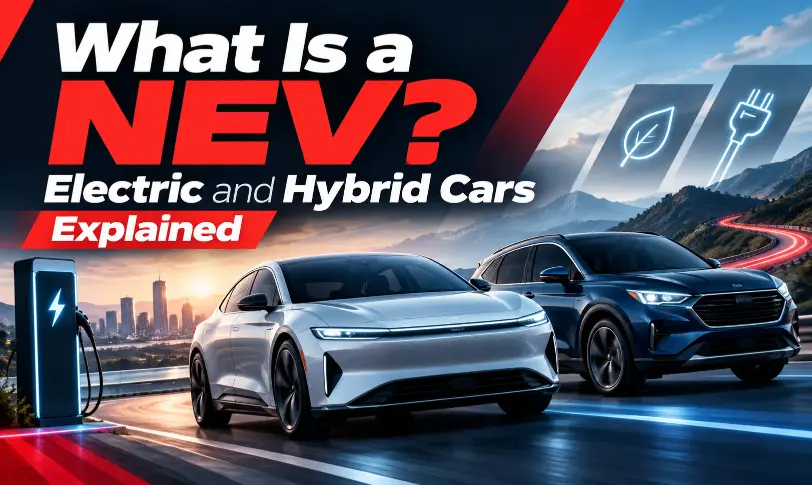

What is NEV, and why is the term becoming increasingly common in the automotive industry? NEV stands for New Energy Vehicle and covers much more than fully electric cars. The category includes battery electric vehicles, plug-in hybrids, and hydrogen fuel-cell vehicles. Automakers such as BYD are increasingly focusing on NEVs as demand for alternative-energy vehicles grows across markets including the Middle East and Africa.
What Is NEV? The Meaning of New Energy Vehicles
A New Energy Vehicle (NEV) is a vehicle that uses an alternative energy or electrified powertrain rather than relying exclusively on a conventional petrol or diesel engine. When people ask what is NEV, the term generally covers battery electric vehicles, plug-in hybrid electric vehicles, and fuel-cell electric vehicles.
Often, people confuse NEV with ‘neighbourhood electric vehicle ‘, the small, low-speed vehicles typically found in gated areas. They are not synonymous.
What Is NEV 3 Main Types of New Energy Vehicles
Typically, there are three types of NEVs.
- Battery Electric Vehicles (BEVs) are powered 100% by electricity. In response, there are no engines or fuel tanks, just a battery and electric motors.
- Plug-In Hybrid Electric Vehicles (PHEVs) are vehicles powered by a standard engine and a wall-socket-chargeable battery. For shorter distances, they can run on electric power, and for longer distances from engine. The BYD models DM and DMi are part of this category.
- Fuel Cell Electric Vehicles (FCEVs) produce electricity through the use of hydrogen instead of a battery. These are still relatively uncommon and much less prevalent than the other two types.
Why NEVs Matter in the New Energy Vehicle Market
NEVs have significantly reduced tailpipe emissions compared to traditional vehicles because they rely on electric power as opposed to combustion. They also offer increased energy efficiency. They lose a lot less energy as heat in comparison to a traditional engine.
You also have a practical benefit when driving a PHEV: charge at home, only use petrol for short trips, and benefit from having a full tank of petrol for longer drives.
BYD’s entry into the Middle East and African Market
BYD is the leading NEV company worldwide, rapidly expanding throughout the region. Meanwhile, BYD’s sales in the UAE increased by more than 970% year-on-year, securing its place in the market with a 26% share. Saudi Arabia sees the retailer expand its presence from three to ten showrooms by the end of this year after competing with Tesla’s arrival in the country.
In terms of market share, BYD is ahead of BMW, Mercedes-Benz, Porsche and Tesla in the wider Middle East and Africa passenger EV market, with around a quarter of the market share.
But the area remains with significant challenges. With extreme heat, an inadequate charging network, and high initial costs, EVs account for only more than 1% of oil and gas sales in the Middle East. BYD is betting that its PHEVs are better suited for a place where charging isn’t everywhere yet.
Conclusion
So, what is NEV? NEV stands for New Energy Vehicle, an umbrella term covering battery electric vehicles, plug-in hybrids, and hydrogen fuel-cell vehicles. Unlike conventional vehicles that depend entirely on petrol or diesel, NEVs use electricity or other alternative-energy technologies for all or part of their propulsion.
The category is becoming increasingly important as manufacturers such as BYD expand their electric and plug-in hybrid line-ups in markets including the UAE, Saudi Arabia, and other parts of the Middle East and Africa. Understanding the difference between BEVs, PHEVs, and FCEVs makes it much easier to compare the rapidly growing range of new-energy vehicles.