
A Car Inspection Report can tell you a lot about a vehicle’s true condition, but only if you know how to read it. Understanding the ratings, inspection points, photos, and comments can help you make a better buying decision.
Start Your Car Inspection Report With the Overall Rating
Typical inspection reports begin with a review of what the car is and a score from 1 to 10. This number will give you an instant indication of the overall condition of the vehicle.
However, it doesn’t end there. One parts problem, such as the engine or suspension, can cause a car to perform decently, and another can cause it to flop. The overall rating is an initial indicator, not a complete assessment.
Understand Your Car Inspection Report
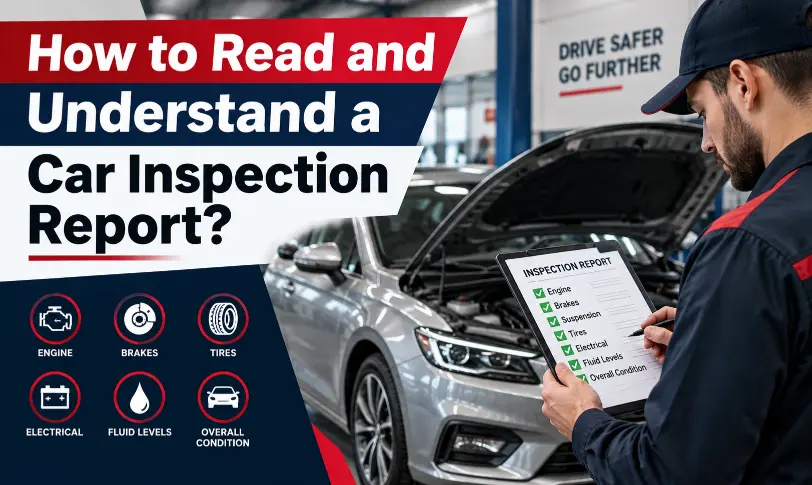
More than 200 examination points have been identified and checked as part of a proper inspection. That means tyres, brakes, lights, fluids, belts, batteries, a complete road test for handling and performance, and more.
The usual layout for the report is as follows: outside, inside, engine, suspension and electrical. Reading through it section after section, instead of heading straight for the score, will help you much better determine what you are purchasing.
Do the Engine Section first
The most attention gets paid to the engine section. It is the centre of the car, and any problems with this part of the car are generally the most costly to fix. For notes on engine noise, vibration, and smoke levels. Even if the rest of the report appears to be clean, if there is an issue flagged here, then it should be taken into account.
Don’t Skip the Suspension and Paint Details
Suspension issues may not manifest themselves during brief test driving on flat roads. They usually show up as you’re driving on rougher surfaces. Pay careful attention to this area for shocks, bushes, and brake pads in particular.
It is also important whether painting is at a thick or thin application rate. The specially designed equipment enables inspectors to identify panels that have been previous accident damaged (possibly unnoticed by visual checks) and repainted or filled.
Use the Photos, Not Just the Text
A helpful electronic report has pictures and written comments for each section. Photos provide a visual look of what the inspector witnessed, in addition to being described. Use the photos to compare with the notes to develop even more information about the car’s true condition.
For Imported Cars, Check the Auction Sheet Cross-Reference
A good inspection report should compare the car to its original Japanese auction sheet if you’re viewing an imported Japanese car. This is to confirm the actual grade, real repairs, and actual mileage at the port, before a visual inspection might detect it.
Conclusion
A Car Inspection Report can reveal important details about a vehicle when you read it correctly. Begin with the overall rating, read carefully with the engine and suspension sections, refer to photos as documentation, and don’t pay attention to the fine print. Read this way, an inspection report is a true decision-making tool.