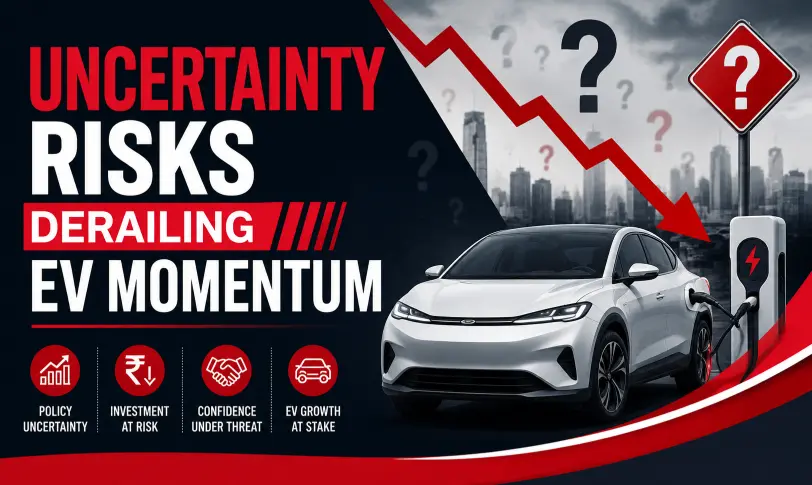

Pakistan EV policy uncertainty is becoming a growing concern for industry stakeholders and policy experts as the country prepares for the next phase of its clean mobility transition. Experts warn that unclear or inconsistent automotive policies could weaken consumer confidence, delay investment decisions and slow the momentum of electric vehicle adoption.
Why Policy Continuity Matters Right Now
There is a reason behind this concern. The ongoing Automotive Industry Development and Export Plan (AIDEP) expires in June 2026. The government is now striving to bring its planned replacement into line with the National Electric Vehicle (NEV) Policy 2025-30. It was launched last year to have EVs account for 30% of new vehicle sales by 2030.
In addition, advocates believe that the new framework should closely mirror the NEV Policy and not create conflicting goals, incentives, or timelines. Pakistan EV policy uncertainty could otherwise discourage manufacturers and investors from making long-term commitments to the country’s electric mobility sector. This is an economically significant transition. The NEV Policy was costed to save over 2 billion liters of fuel per year, and to create close to $1 billion in foreign exchange savings annually. In addition to emission reductions from the petroleum-intensive transport sector.
How Pakistan EV Policy Uncertainty Affects Buyers
Danish Khaliq, Vice President Sales and Strategy at BYD, put it bluntly: A car is one of the single largest financial decisions most of them make, and that requires policy assurance.
A purchased vehicle is among the greatest financial judgments a person can make, and buyers must have confidence in making that judgment,” Khaliq said. Pakistan’s automotive sector, having taken concerted steps over the past 3 years to re-establish market confidence, is clearly visible now. The key factor behind it has been the development of NEVs and EVs, which are premium technology vehicles with superior fuel efficiency.
The lack of clarity and consistent auto policy threatens to derail this momentum by delaying investment decisions and reducing consumers’ confidence.
Pakistan’s EV sales numbered a few hundred in 2021, now roughly more than 80,000 as of mid-2025, largely comprising 2- and 3-wheelers. While this is real progress, policy-makers have also recognised that the pace of adoption is lower than originally envisaged in the NEV Policy.
What Investors Need to Consider
Buyers aren’t the only ones affected. Pakistan EV policy uncertainty is also a major concern for investors considering local assembly or manufacturing commitments where returns may take several years. The need for predictable tariffs, incentives and localization rules is therefore especially important for long-term investment decisions. A sudden, unexpected partway-through change to a tariff or incentive can startle investors to whom an investment had appeared viable under the initial conditions.
This isn’t a call to freeze policy in place. Rules must adapt to changes in the market and new technology, experts agree. Where adjustments to manufacturing incentives are warranted, they should be based on an objective evaluation of their likely consequences. A few of those developments are reflected in the proposed draft policy. This is said to include reduced tariffs, phasing out Special Regulatory Orders slowly, and increasing localization targets. Thus creating changes in pricing and availability of vehicles if that policy continues as proposed.
Pakistan EV Policy Uncertainty: What Comes Next?
Pakistan EV policy uncertainty has placed the country’s electric mobility transition at a sensitive point. Although consumer confidence in the automotive industry has recently started to recover, the transition from the existing policy framework to the next one could influence whether EV adoption continues moving toward the country’s 2030 targets.
Either the next cycle of policy will provide buyers and investors adequate clarity and security to continue to invest in the automotive future of Pakistan. Otherwise, they’ll have to reconsider their decisions, and it all depends on the policy.