
Car buying is one of the significant heavy investments that people make in Pakistan. However, surprisingly many people enter the deal without being adequately informed, and only learn the actual issues when it is too late. This Checklist is designed to prevent this.
Either new or used, a complete car buying checklist can save you time and your finances.
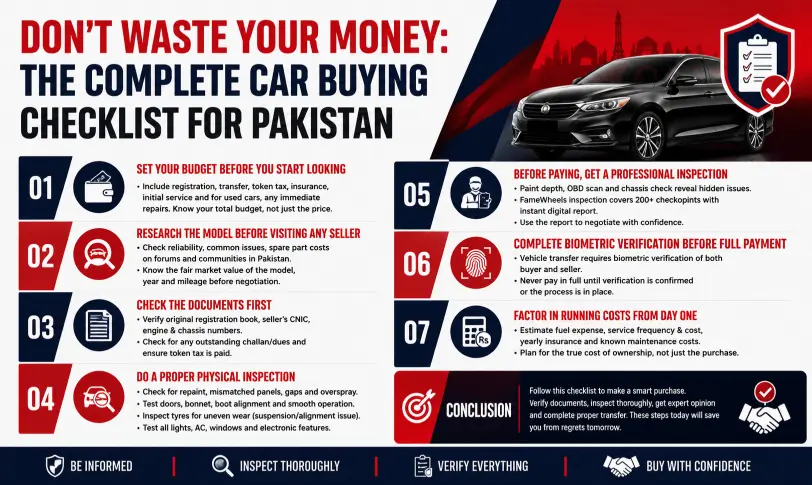
Step 1: Set Your Budget Before You Start Looking
The most costly car-buying error is taking place before searching even begins. Consumers may set a budget, buy a vehicle that is just more than their budget, and rationalize that it’s affordable.
Come with a clear understanding of the overall budget and not only the purchase price. Include registration and transfer fees, token tax, insurance, and initial service expenses. And for used cars, any immediate repairs the car may require. While the cost of the vehicle is Rs 20 lakh, the immediate required repairs are at Rs 2 lakh, so the overall purchase price is Rs 22 lakh.
Step 2: Research the Model Before Visiting Any Seller
Each vehicle is renowned for something. There are models that have a good reputation for reliability and low cost of components. Some owners have certain concerns that they will experience at some point. Review what has been said about the car you want to buy from forums and communities in Pakistan, and not only from the brochure.
When purchasing a used car, check out the fair market value of the model, year, and mileage. If you enter into a negotiation with no idea of the value of the car you are looking at, then the dealer will have the power.
Step 3: Check the documents first
Before viewing the car, request paperwork when meeting with the seller. This is because if the document is not in order, everything else is irrelevant.
Ensure that the registration book is original and not a photocopy of the original. Check whether or not, the seller’s CNIC matches the name in the Registration. Verify the engine and chassis numbers with those of the vehicle. Check if any outstanding challan or dues exist and if the token tax too is paid. If it’s a transferred vehicle, verify that nothing is pending.
Step 4: Do a Proper Physical Inspection
Examine the car in sunlight, not in a dim garage or at night. Round all panels and check for colour mismatch, gaps that vary between panels, or overspray around rubber seals. These are indications of a previous accident and signs of repainting or replacing the panel.
Open and shut all doors, bonnets and boot. All should run without problem and come into alignment. Irregular alignment may indicate structural problems which have been patched up and not made right again.
- Inspect tyres for irregular wear.
- Asymmetrical wear is a common sign of suspension and/or alignment issues.
- Inspect all lights and indicators, air conditioning, window and electronic equipment.
- Test all the things that should work.
Step 5: Before paying for a professional inspection
Even if the car is a perfect example, if a used car of substantial value is to be considered, a professional inspection is a requirement. A trained inspector, trained with diagnostic tools, using a structured checklist, will discover problems.
Paint depth readings are capable of seeing repainted panels that are not visible to the naked eye. An OBD diagnostic scan extracts the codes that are dormant but are being stored in the car. A chassis check seeks out repairs that will likely not be known by the seller. The FameWheels inspection service brings over 200 checkpoints and a detailed report delivered immediately in digital format. The report also provides you with documented reasons to renegotiate.
Step 6: Complete Biometric Verification Before Full Payment
The vehicle transfer in Pakistan requires verification with Biometric Data of both the purchaser and the seller to transfer vehicle ownership. Never pay in full until the seller confirms that they can be verified by biometrics and the process is either completed or clearly planned.
Final payment depends on final verification, which ensures that the buyer does not have to deal with a delayed transfer after giving the money.
Step 7: Factor in Running Costs From Day One
It is important to estimate monthly fuel expenses based upon the probable mileage, the typical service frequency and expenses, a yearly estimate of insurance, and any known maintenance costs for each model.
Conclusion
Having a proper car buying checklist is necessary to make a good purchase. It’s the choice between something you might feel good about six months down the road, versus something you’ll regret. Before paying, let the documents scan, inspect the vehicle thoroughly, get an expert opinion, and make the proper transfer. All of the steps on this list are steps that someone has learned the hard way.