
Electric mobility has finally arrived on Pakistani roads. The increase in petrol prices and the introduction of new models of electric vehicles in the market are raising interests of drivers. Nevertheless, even the acronyms BEV, PHEV, and HEV can be easily confused.
You are not the only one who finds the BEV and PHEV difference to be puzzling. The issue of comparinghybrids and plug-in hybrids also entangles many buyers.
This article introduces the key types of electric cars in simple language without using any jargon. So that you can decide without having doubts on the Pakistani roads.
What is an Electric Vehicle?
An electric vehicle (EV) uses electricity as a fuel, as opposed to petrol or diesel. It is powered by rechargeable batteries, which power an electric motor.
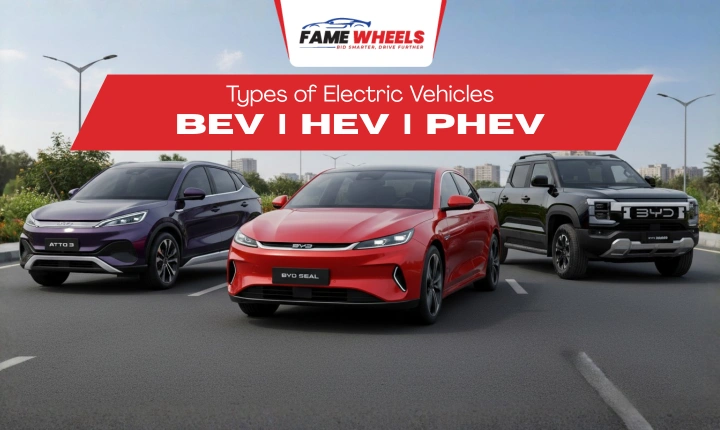
EVs come in three main types:
Battery Electric Vehicles (BEVs):
completely electric, no internal-combustion engine.
Plug-in Hybrid Electric Vehicles (PHEVs):
combine an electric motor and a petrol engine, and must be charged by a charging plug.
Hybrid Electric Vehicles (HEVs):
self-charging hybrids that do not require an external plug-in.
All types of electric cars satisfy varying driving needs and provide unique advantages to Pakistani drivers.
Explained the BEV vs PHEV difference
The most important distinction: is the car an all-electric or does it have a fuel reserve?
Battery Electric Vehicles (BEV):
- Electric vehicles that can be run only on electricity in large battery packs.
- Needs to be charged regularly in home outlets or in public stations.
- No petrol-engine, no exhaust pipe, no tailpipe emissions.
- Propose the lowest running costs in urban driving with fixed charging programs.
Plug-In Hybrid Electric Vehicles (PHEV):
- Integrate a conventional petrol engine and an electric motor.
- In order to get the most out of it, electric, require plug-in charging.
- Use electric power only on short routes, usually 30 to 60km.
- The battery runs out, and the petrol engine picks up in its place.
This is critical in Pakistan. An EV user in Karachi will have to refuel their vehicle at home and drive trips more intensively around the charging points. A PHEV owner can work on electric power during weekdays and use petrol on weekends without being concerned with range.
Maintenance Comparison:
- BEVS come with fewer moving parts, and their long-term maintenance costs are cheaper.
- PHEVs require engine and electric system maintenance, posing more complexities.
- Both must undergo regular tire rotation and brake-fluid checks.
What Is a BEV?
BEV = Battery Electric Vehicle: pure electric vehicles with no internal-combustion engine.
Key Characteristics:
- Rides on a battery of lithium-ion.
- The cleanest solution: Zero tail-pipe emissions.
- Quick acceleration with instant torque.
- Silent, smooth ride.
- Demands chargers either at home or publicly.
Charging Options:
- Home outlet: 8 -12 hours to fully charge.
- Wall box: 4-7 hours based on capacity.
- DC fast charger: 20‑80 % in 30‑60 minutes.
Ideal For:
- City commuters have private parking at home.
- Eco-conscience consumers.
- Individuals who prefer low maintenance.
The market examples are the MG ZS EV, the Nissan Leaf, and imported Teslas.
What Is a PHEV?
PHEV: Plug-in Hybrid Electric Vehicle: a hybrid between traditional and fully electric vehicles.
How It Works:
- Brings an electric engine together with a petrol engine.
- It has a smaller battery than a BEV and bigger than a typical hybrid.
- It has to be charged similarly to a full electric car.
- On a full charge, it can move 30-60km using electricity.
Benefits to the Pakistani Drivers:
- Daily commuting electric savings.
- There is no need to look on the highways to find charging stations.
- Less emission compared with standard automobiles.
Hybrid vs Plug‑in Hybrid
The distinction between a plug-in hybrid and a hybrid is basic, but easily misunderstood.
Hybrid Electric Vehicle (HEV):
- It is a mixture of an electric motor and a petrol engine.
- Does not require any plugging in to charge a battery.
- It is charged through regenerative braking and engine work.
- The electric drive helps when accelerating and driving slowly.
- Produces steady fuel savings without operating interference.
- Frequently advertised as a self-charging hybrid.
Plug-in Hybrid Electric vehicle (PHEV):
- Bigger battery than standard hybrid.
- Needs to be charged using a cable.
- Is capable of traveling a large range on electric energy.
- More effective than an HEV in everyday use with regular charges.
- Offers allow flexibility in longer routes with no charge stations.
Fuel Savings Comparison:
- HEVs can enhance the fuel economy by 20-35% when compared to standard petrol vehicles.
- The savings of PHEVs are significantly higher, sometimes fuel-free for an entire week of work.
- However, regular charging is the key to PHEV savings.
Which One Makes Sense in Pakistan?
HEV: Any person living in an apartment who has no special parking. No charging infrastructure required, simply drive and save.
PHEV: Ideal with them since they have garages and can charge them at night, excellent on daily commutes, along with long-haul trips once a week or so.
Which Electric Vehicle Type Would You Purchase?
The decision between electric vehicles only depends on the way you drive and where you live.
Choose BEV if:
- You have a house with a dedicated parking space and can be charged.
- To a great extent, you drive within the city.
- You would wish for the minimal running costs.
- Zero emissions matter to you.
Choose HEV if:
- You do not have your own parking in an apartment.
- Charging stations are not readily available.
- You desire to save on fuel and not alter your routine.
- You engage in a lot of long-distance driving.
Choose PHEV if:
- Your driving profile involves commutes in the city and regular long distances.
- You have home charging.
- You desire to save electricity during working days.
- You require weekend petrol reserves.
Conclusion
Electric cars do not need to be baffling. The BEV vs PHEV difference gives you the knowledge to align technology with your way of life. Electric cars are available, whether you take environmental benefits, fuel conservation, or long-range flexibility into consideration.
The way the automotive environment in Pakistan is changing, it may be wise to make a good choice today, and you will be able to drive into an electric future. For smooth car buying and selling, contact FameWheels.