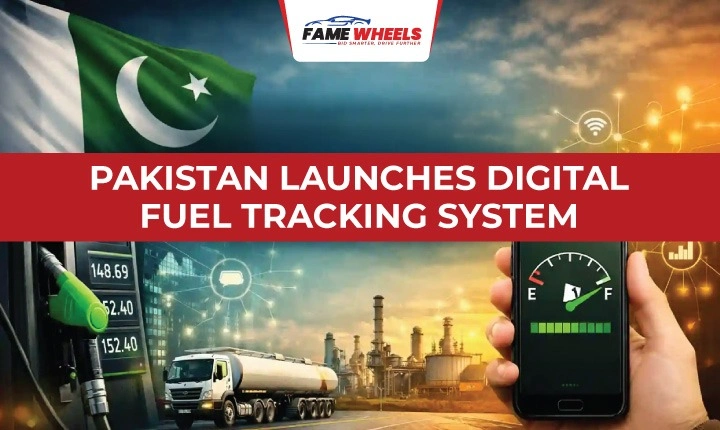

Taking a step forward towards this recurring Pakistan problem of petrol shortage, the Oil and Gas Regulatory Authority (OGRA), in association with the Punjab Information Technology Board (PITB), has completed a digital fuel quota system. In contrast to a mere tracking app, the new Pakistan fuel tracking app will indeed restrict the amount of fuel each consumer can buy according to a set quota.
The system will work to eliminate hoarding, artificial scarcity, and introduce openness to the fuel distribution system that Pakistan depends on. The system will limit the transaction in case a consumer attempts to buy beyond the designated limit.
The Digital Fuel Quota System
The new government app involves the registration of consumers with their vehicle registration number and CNIC. With registration, every customer is provided with a fixed quota per day or week of fuel based on the evaluated usage pattern and total fuel supply.
An individual can use the app to create a digital voucher before refueling, and the voucher is validated immediately by a special device by the operators of the petrol pumps. When a person orders 20 liters and has a 15-liter ration left, the system will only issue out the eligible amount.
Authorities verify that the system will need petrol stations to have special devices to operate the system so that all the outlets will carry out the system uniformly.
The rationale behind the Government doing this
This digital system is being introduced when there is an increasing strain on the energy sector of Pakistan. Consumption has been on the increase, even with the high fuel prices, and has kept a cumulative strain on the federal finances. Already, the government has paid out in the tune of Rs100 billion in fuel subsidies to consumers due to the world price shock.
Pakistan’s energy crisis has been aggravated by increasing geopolitical tensions and the shutdown of global supply routes. As close to 20 million barrels of oil are transited through the Strait of Hormuz daily, a vital artery to Pakistan in terms of energy imports, the risk of disruption to supply has rendered demand management a national priority.
Finance Minister Muhammad Aurangzeb has revealed that the government is looking at fuel purchase and logistics daily. The new digital system will assist the authorities in making quicker and better decisions and stabilize the supply of petrol in Pakistan under varying world conditions.
Who will be under the Quota System?
The government has already completed the motorcycle and rickshaw system, which constitutes a major percentage of daily commutes in Pakistan. One last decision yet to be reached is whether the scheme will be applied to small cars, which may have engines of up to 800CC.
The system is meant to provide targeted fuel subsidies to low-income users who use two and three-wheelers as daily commuters and the workforce. Through the connection of quotas with registered vehicles, the government hopes that relief is given to the most needy.
Will This Reduce Shortages in Pakistan?
The energy crisis that Pakistan has been attempting to resolve can be literally right before their eyes. The target of this initiative is to reduce hoarding, the fake shortages, and mismanagement of supplies, a bane of the sector over the decades. Limiting the amount of fuel that people can buy for each car will stop people from hoarding in case of perceived shortages.
Nevertheless, the effectiveness of this Pakistan tracking fuel application rests on several major aspects:
- Nationwide implementation in all districts.
- Full registration of all the vehicle owners.
- Strict implementation of violations.
- Cooperation between the new system and the consumer.
Though the system holds promise, the history of petrol crisis news in Pakistan has demonstrated that making it a reality is the most difficult part.
What Remains Unclear?
The positive perspective does not exclude some details of the system that remain unclear:
- Will the quota be on all vehicles or on two and three-wheeler only?
- What will be the daily quotas of various users?
- When is the system going to extend to all urban and rural areas?
- What would happen to the consumers who use more than their quotas?
Until these questions are answered, it is unclear how much the fuel delivery system that Pakistan depends on is actually being hit.
This is What It Means to Consumers
To ordinary drivers, this program is a huge change. Pakistan will no longer have to worry about petrol availability during a shortage, as the consumers will have a certain quota that they can count on. The hoarding is also avoided since the system does not allow any single consumer to get more than what is rightfully theirs.
The government hopes that this system will make the fuel supply chain more transparent and less susceptible to manipulation, a significant move towards ending the decades-long fuel crisis that Pakistan has been facing.
Conclusion
The introduction of the digital fuel quota system in Pakistan is a bold move in the direction of the country trying to make its energy resources more thoroughly managed. By replacing what was merely a tracking system with a real purchase quota, OGRA and PITB have presented a tool that may at last resolve the frequent petrol shortages that have exasperated consumers over the years.
Nonetheless, technology is not sufficient. This initiative will be successful, as it is going to be implemented consistently, with all stakeholders collaborating and held accountable. When done right, this system would be able to change the operations of fuel distribution in Pakistan- introducing stability, openness, and equal access to millions of consumers nationwide.
The country is on alert. Is this the turning point that Pakistan has been waiting for? Only time will tell.
FAQs
A real-time feedback system by OGRA and PITB that monitors imported petroleum, refinery production, and storage to eliminate shortages of petrol.
It links the marketing companies of oil with petrol pumps in the country to give real-time data on the movement and supply of fuel to prompt government action.
It tries to control hoarding and abuse, and it can only actually be effective when implemented and enforced by all companies.