
The European automotive sector is not prepared to finish the race, as the clock ticks towards 2035. In a stark warning that has sparked ripples in the industry, Oliver Källenius, CEO of the Mercedes-Benz Group AG, warns that a planned ban on new combustion-engine cars by the EU may be a disaster for the car industry in Europe. What he is telling Brussels is: we must have a real re-evaluation of how quickly and harshly this transition can be achieved before it is too late.
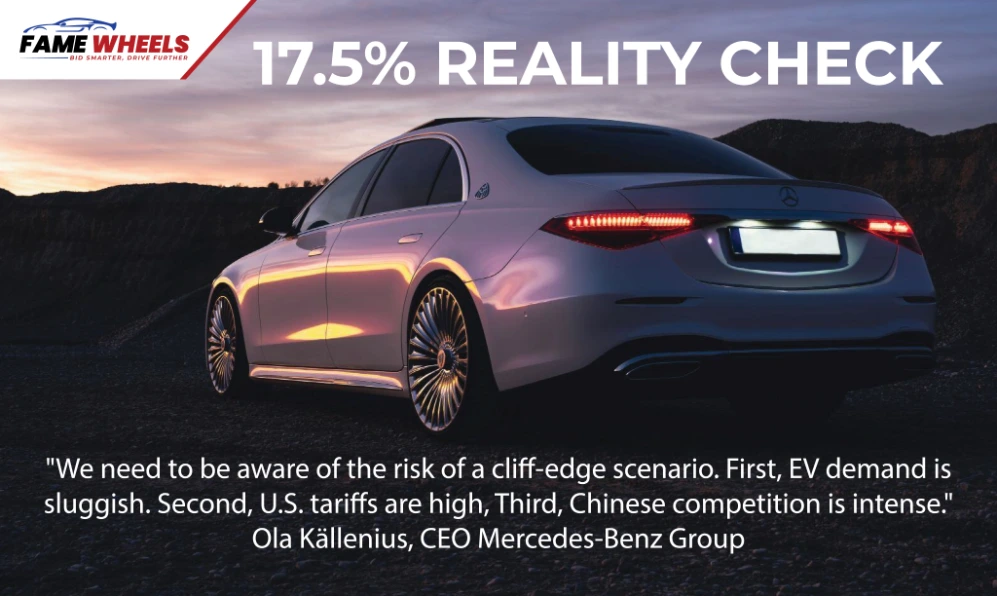
The 17.5% Reality Check
Källenius did not use words in a manner of speaking, considering the industry he was talking about was on the ropes. He confirmed the idea that decarbonization is a very important target, but some challenging numbers reveal a concerning pattern. Battery electric vehicles across the EU, UK, and EFTA had made up only 17.5% of the new car sales by the end of 2025. With Mercedes-Benz itself, electrified cars, and hybrids included, comprise approximately 20 percent of deliveries.
To Källenius, these statistics point to a fatal disconnect between policy aspiration and market reality. Any abrupt, hard shutdown in 2035 when EV market share has yet to surpass the minorities would lead to a chain of disastrous effects.
The “Cliff‑Edge” Danger
Källenius gave a warning about a cliff-edge situation: a situation in which consumers will buy internal combustion engine cars in the last weeks before the ban, only to watch the market grind to a halt the day after. This would generate a disastrous decline that would add to the already weak condition of the industry:
- Slow Demand: The demand is slow due to high interest rates and the fact that EVs are still expensive.
- High U.S. Tariffs: trade tensions create an extra burden in an already tense supply chain.
- Chinese Intense Rivalry: strong competition between domestic makers such as BYD at home and internationally.
A Tech‑Agnostic Path Forward
So, what is the solution? Källenius states that Europe should be flexible, technology-neutral, rather than a strict, complete prohibition. He cites China as an example of how to get things done: fast EV usage through incentives and natural market development, not dictates.
To rescue the industry, he suggests:
- Tax Breaks and Incentives: ensure EVs are affordable to the average consumer.
- Cheaper Charging Electricity: develop infrastructure and make charging cheaper.
- Pragmatic Targets: allow the market to run, without artificial deadlines.
Conclusion
The wake-up call to the European policymakers is the reality check by Ola Källenius. The desire to become the leader in green technology is admirable, but unless the transition is done on a step-by-step basis, the EU may well lose its local automotive industry completely. Since Chinese competitors have gained momentum and American tariffs are looming, it is time to be sensible about a flexible, adaptable policy.
Can Europe meet the 2035 deadline, or is a delay unavoidable? You can comment on the same below and follow FameWheels to get the most recent news on the future of the auto industry.