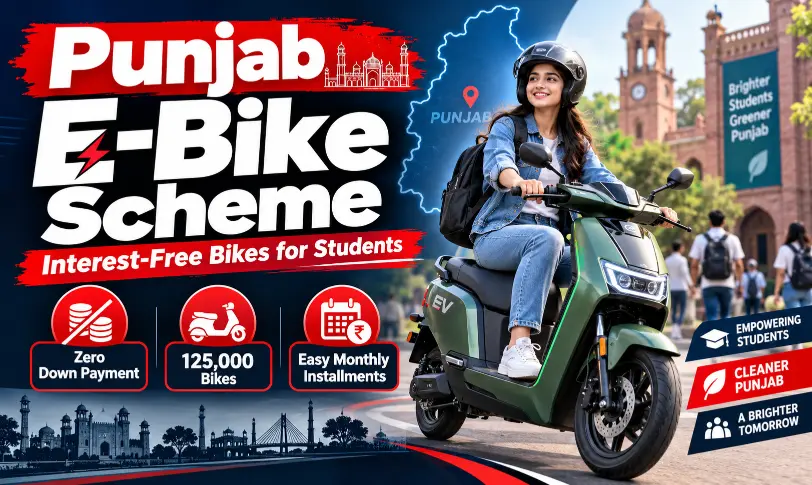

Punjab E-Bike Scheme makes electric bikes more affordable for students through interest-free monthly installments. There is no down payment, and students only pay a fixed monthly amount.
The actual benefits of the Scheme
Chief Minister Maryam Nawaz signed an expanded e-bike scheme which would help provide over 125,000 new units for male and female students. The biggest difference from the previous versions: there isn’t any trade-in value. There will be no up-front cost for students.
Rather, the government pays both the down payment and the interest. Students only pay a fixed amount on a monthly basis, and that is estimated to be around Rs. 3,000. The insurance cost is also remunerated by the government.
How the Punjab Student Bike Scheme Has Changed
This wasn’t the scheme’s first version. In July, boys were obliged to pay a Rs. 14,000 down payment plus Rs. 2,100 a month. At this point, their down payment was already waived for female students.
Unlike the earlier changes involving female students, this change applies to everyone and eliminates the down payment. The steep price tag was a big issue for many families, even if payments were small each month, so that was a big change.
Who’s Actually Running This?
The scheme is not from a private lender; it is the Bank of Punjab (BOP) that is involved in the scheme. The bank disburses loans, verifies the borrower, and collects the monthly installments. The government’s job is straightforward: it pays the interest rate; students do not pay the interest rate on their bill.
Students are not likely to have a source of income, so the bank will ask for a guarantor or co-borrower. That person’s income is used to determine a debt burden ratio, which is a standard measure that ensures that monthly loan payments are not more than 40% of net income.
Composing for the Scheme
The official Punjab e-bike application opened on September 4, 2026. In case of selection, the Bank of Punjab conducts a financial checkup of the Guarantor before final confirmation.
There are a few basic guidelines to follow. Applicants must not be the owner of any registered vehicle, and up to one bike is allowed per family (even if more than one child submits an application).
Conclusion
Punjab E-Bike Scheme is part of the province’s wider push to promote electric mobility alongside e-buses, e-taxis, and other clean transport initiatives. A zero down-payment, interest-free cycle would actually be for the student who’s dealing with rising petrol and daily expenses on a bike.
Today’s real challenge is production. There will be more than 125,000 bikes promised, and applications are just opening; how this scales will be the determining factor in whether this can be a long-term program or merely an ambitious promise.