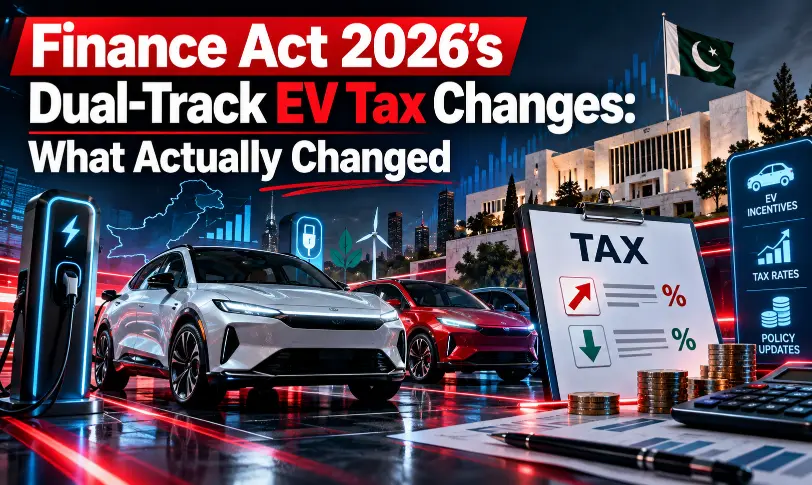

EV Tax 2026 introduces a new approach to electric vehicle duties in Pakistan. The policy adds higher charges for premium imported EVs while continuing support for local assembly and affordable electrified vehicles.
EV Tax 2026: The Old System Is Gone
Earlier, a 0% Federal Excise Duty rate was applicable to imported completely built-up electric vehicles irrespective of their prices. It is replaced in the Finance Act 2026 (from July 1) with a three-tier value-based approach under Section 25 of the Customs Act.
According to new guidelines, EVs up to $75,000 will stay free of the tax. Vehicles priced between $75,000 and $110,000 face a 30% ad valorem duty. A 40 percent duty applies to imports exceeding $110,000, creating a significant increase for anyone importing an expensive electric car.
Why EV Tax 2026 Changes Were Introduced
This guidance, issued by the Federal Board of Revenue to field formations on September 11, was confirmation of this policy split. EVs were not previously included in this general duty to own an expensive vehicle. In the new framework, a standard protection on high-priced EVs is eliminated.
Logics are based on Pakistan’s economic reality. The FBR is aiming for Rs. 15.264 trillion in collections required for 2026-27, rising significantly from the previous year. So new revenue streams had to be found, and the import of luxury EVs was one such possibility.
Local Assembly Still Gets Real Protection
Locally manufactured concession vehicles continue till June 30, 2027, while imported luxury cars have higher prices. Customs Duty for selected components of the CKD kits is still 1% of the value for batteries, motors, and controllers used in the make of EVs. CBU hybrid and plug-in hybrid vehicles are also brought in locally for assembly at a 1% duty; parts at 3-4%.
This is a deliberate gap. The government wishes that manufacturers move towards locally manufactured products instead of outright imports.
Conventional Vehicles Face a New Duty Too
In addition to the existing Federal Excise Duty (FED) of 30%, Special Excise Duty (SED) was collected at an additional 86% for imported cars coming in between 2000cc and 3000cc.
Conclusion
EV Tax 2026 creates a distinction between luxury EV imports, local assembly, and mainstream electric vehicles in Pakistan. The luxury import is now at real cost, and the meaning of the protection is preserved at the level of local assembly and mainstream electrified vehicles.