

We introduced the reader to the concept of ethanol-blended fuel and different ethanol blends in the United States, Brazil, and other countries in Part 1. This section includes more difficult questions. In what ways is ethanol beneficial to the climate? Does it become a competitor to the food chain? What benefit does it serve? And how does it compare to EVs?
Why Does Ethanol Not Reduce Emissions?
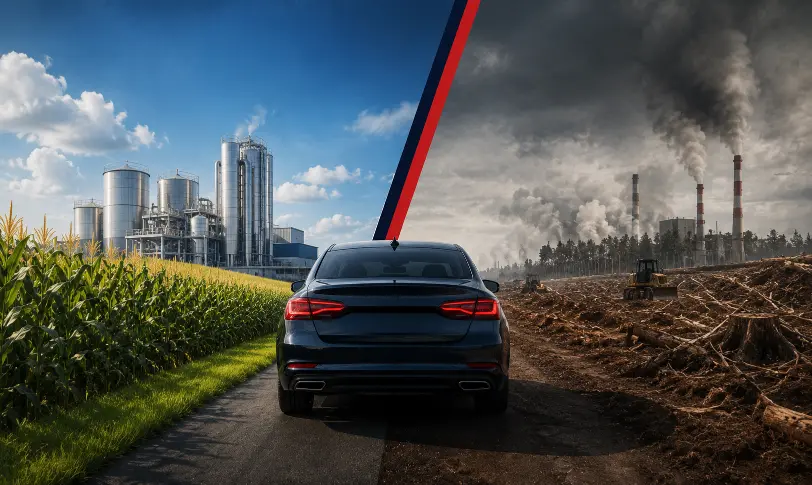
The perception remains questionable and depends on the availability of land use.
The case for ethanol: According to the USDA, corn ethanol is an 80% to 90% lower-emission fuel compared to gasoline, and will get even cleaner in the years ahead. Proponents argue the higher output, cleaner refinery fuel, and beneficial by-products such as distillers’ grains (which reduce demands for supplemental feed crops).
The results of its case against it: A study in the Proceedings of the National Academy of Sciences in 2022 came to a different conclusion. When land use is considered, US corn ethanol was found to be at least 24% more carbon intensive than gasoline by researcher Tyler Lark. The additional acres of cropland due to the ethanol policy added to the carbon pool of soil carbon, which was not accounted for in previous estimates. The findings were challenged by the industry, and the situation remains undecided.
The bottom-line lessons: Land use and ethanol feedstock determine the climate benefit for ethanol. Under both models, it derived from waste materials or cultivated on existing farm lands is better than ethanol made on new cropland. Saying something is “greener” or “worse” without referring to the feedstock and country is no cover for the research.
Paying for food or for fuel?
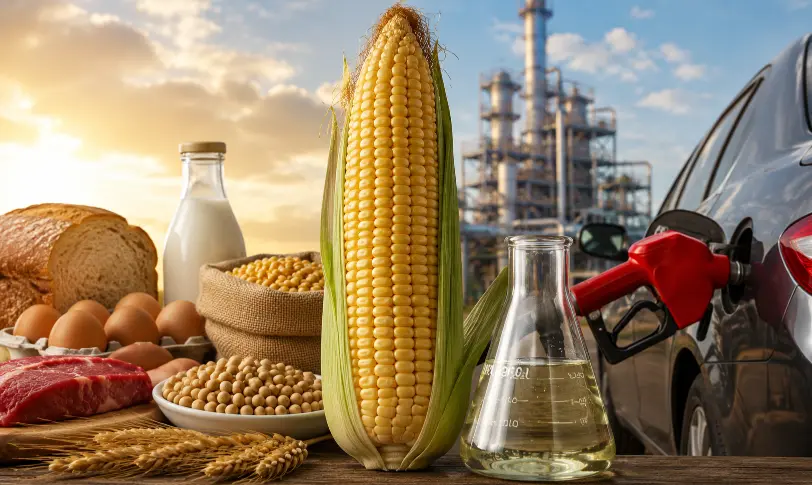
The issue is that about one-third of the U.S. corn crop is used to make it. As demand for ethanol increases, so do food prices, while growing ethanol blend requirements have been found to increase corn futures directly. Some people say this increases feed, meat, and milk prices, particularly for import-reliant nations.
- The counterargument: Only starch in each grain is converted to ethanol. Distillers’ grains and corn oil containing the remaining protein, fat, and fibre are returned to the feed available, replacing another feed crop. This is not “fuel versus feed” as the industry says, and they point to increased yields as evidence that they can co-exist.
- Co-products serve to reduce the impact of ethanol on food supplies, but ethanol demand still has a measurable impact on corn prices, particularly following poor yields. It is not whether ethanol is having an impact on food prices, but how much and whether it’s worth it or not.
- Corn ethanol also has water and land costs that are not normally discussed. They include irrigation requirements, fertilizer runoff, and the change of grassland to cropland. These costs are largely crop-based bioethanol rather than advanced biofuels developed from waste.
Who Actually Profits?
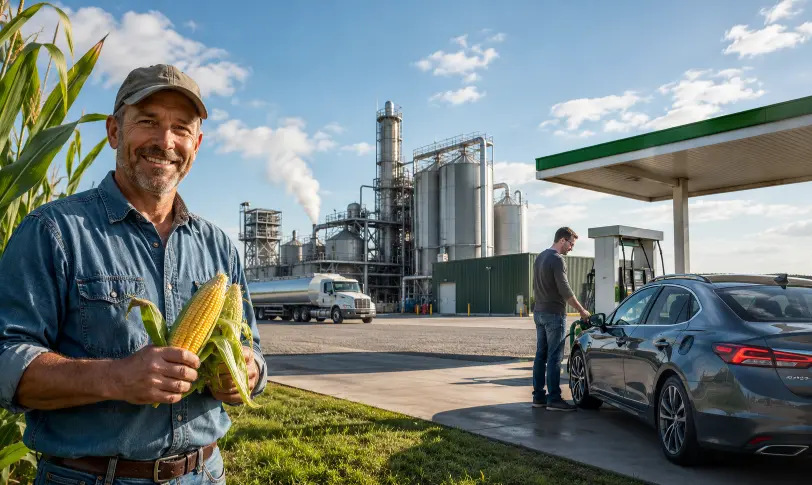
- Farmers receive an assured market for their produce.
- Refiners have a reliably secured fuel market.
- Oil imports are reduced by governments, and they claim they make progress in climate matters.
- Mixed effects for drivers: lower gas prices, but trade-offs in mileage.
- Many automakers, particularly in Brazil, have created entire model ranges around flex-fuel.
This is not evidence of any corruption in mandates for ethanol. However, critics of higher-blends tend to come with the loudest voices in support of it, so it is important to keep in mind when evaluating the strength of pro-ethanol arguments.
Is ethanol fuel a scam?
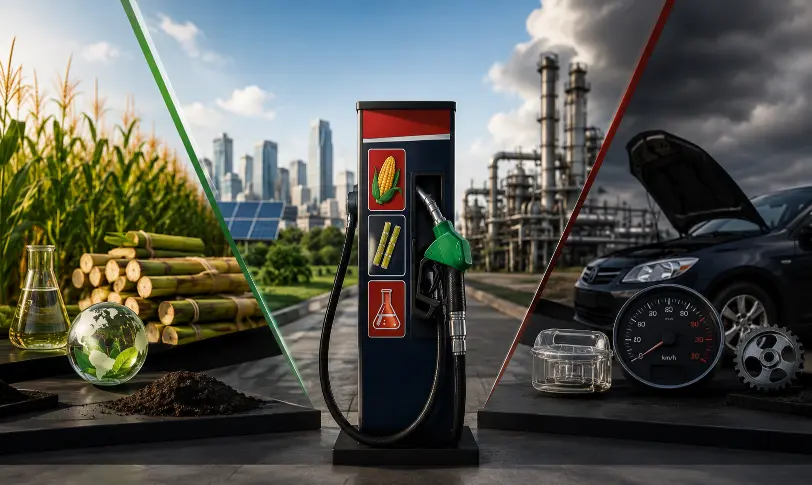
The word “scam” suggests deliberate deception, which is more than is warranted by the evidence. A more accurate way to put it: It has some real costs and benefits which aren’t always communicated clearly at the pump.
What’s real: ethanol has the potential to reduce our reliance on oil, help farmers, and, depending on its feedstock, reduce emissions. What isn’t often calculated: a mileage reduction; limited compatibility with vehicles; and the uncertainty of the climate math above. Yes, it is a policy tool that has real costs and benefits; not a scam, but not the promised win by some marketing either.
Ethanol vs Electric Vehicles
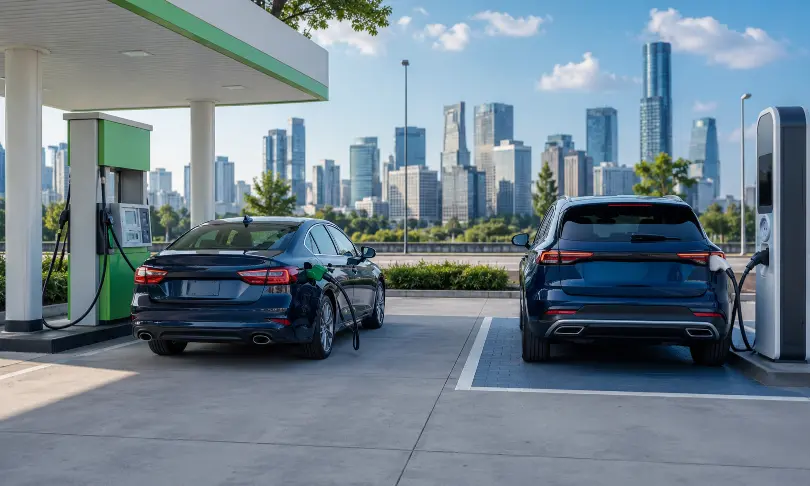
Their goal is to reduce the reliance on oil, but they use different methods.
| Ethanol Fuel | Electric Vehicles | |
| Infrastructure | Uses existing fuel systems | Needs a charging network |
| Emissions | Debated, depends on feedstock | Depends on the power grid |
| Vehicle cost | Close to standard gasoline cars | Often higher upfront |
| Running cost | Depends on price and mileage | Usually lower per mile |
| Resource footprint | Cropland, water, fertilizer | Battery minerals, grid capacity |
What works best may vary from country to country depending on the grid, agricultural and processing facilities, etc.
What Should Drivers Do?
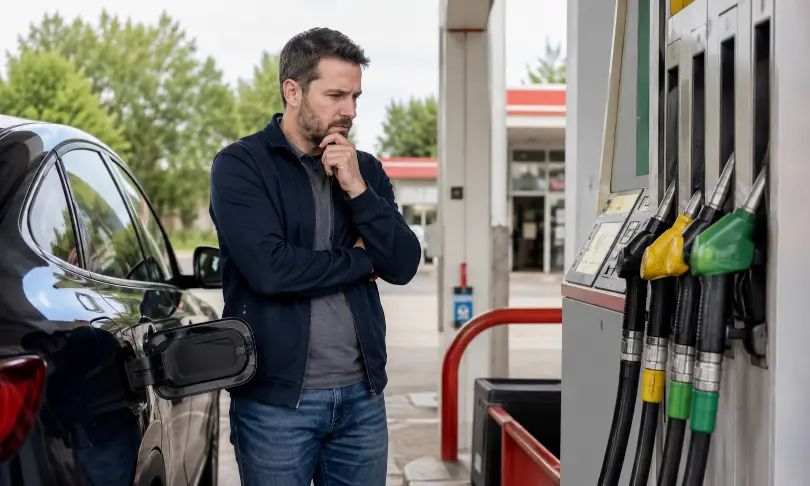
- Before operating a higher blend than suggested, check the fuel cap and the owner’s manual.
- Before choosing a cheaper petrol, measure cost per mile, since a lower price per litre does not necessarily mean a lower price per mile.
- Do not blindly accept things, regardless of whether they are seen as fact. The true answer varies with vehicle, feedstock, and blend.
- Pay attention to your policies, as requirements are changing frequently and compatibility can change accordingly.
The Future of Ethanol
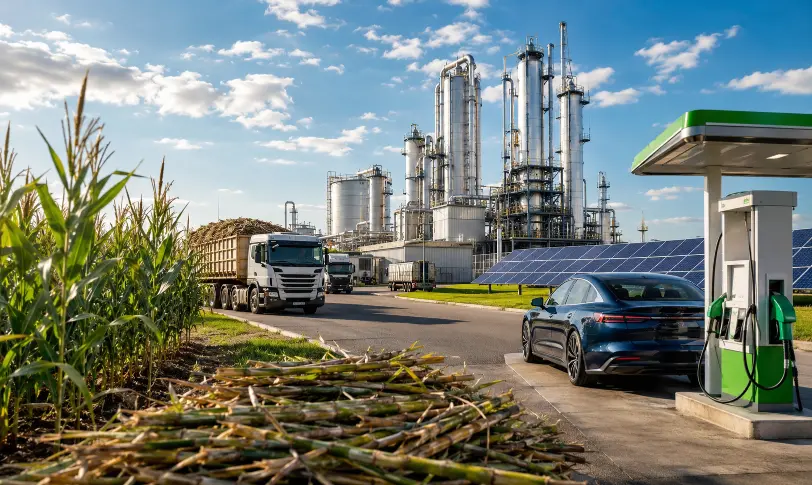
With corn ethanol restricted by worries over food prices and land use, attention has turned to advanced biofuels derived from waste and non-food crops. Ceiling prices are rising in several markets; the EU is considering E20; the US extended the sales of E15; India is looking at blends beyond E20; and Brazil has already passed E30. Flex-fuel technology could continue to expand if additional manufacturers develop automatic engines that operate on ethanol blends.
Conclusion
Ethanol-blended fuel isn’t all good or all bad. The value varies depending on the nation, the raw materials used, the mixing ratio, and the vehicle type. It could help farmers and reduce oil dependency, but it isn’t as clear a win for climate as blending mandates may appear. The best thing drivers can do is to try to escape the situation by understanding its “mix type”, verifying the true cost per mile, and questioning.