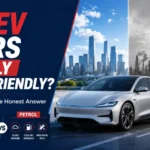
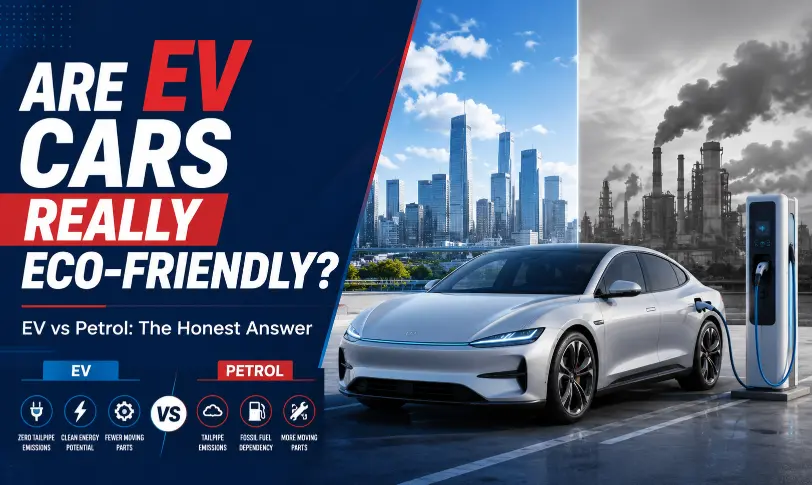

Do EVs really benefit the environment? Indeed, it is a fair question. There’s a lot of confusion between the battery mining debate, the electricity grid debate, and the EV marketing, that’s for sure. The extended-range EV car doesn’t use fuel. It’s no carbon dioxide, no nitrogen oxide and no particulate matter out the back. In urban areas, such as Lahore and Karachi, where smog is now an integral part of the calendar, this isn’t something people anticipate. However, zero tailpipe emissions mean no environmental impact.
The Battery Problem Nobody Talks About Enough
Here are the things EV brands don’t tell you in their ads. The process of manufacturing a lithium-ion battery involves a process of extracting lithium, cobalt, nickel and manganese. That’s through land clearing, high water consumption and a lot of carbon emission even before it rolls off the production line.
So what this really means is that a brand new EV begins its life with a greater carbon footprint than a brand new petrol car. The manufacturing phase is more emission-intensive. If a person chooses to purchase an EV and sells it out after a 12 month period, perhaps they could not be better off environmentally.
When the EV has offset those emissions during its manufacturing process, via cleaner driving, it is about 1.5 to 2 years at average use. In the meantime, every kilometre that is driven is truly environmentally friendly compared to running on petrol. Plus, the lifespan of a vehicle averages 10 to 15 years, so that’s a lifetime difference that matters. Research consistently estimates the entire life cycle emissions for EV cars as 50 to 70 percent below equivalent petrol cars.
Does Electricity Really Change Everything?
Yes, it does. This is the most important factor for Pakistan particularly.
An EV with electricity powered is still cleaner than the petrol car, but not quite as clean as one would expect from the brochure. The emissions don’t simply vanish. They simply switch from the tail pipe to the power plant. So having a clean grid means a clean EV.
Though Pakistan’s electricity mix is still to a large extent dependent on fossil fuels. This is quite a restriction. But something that is not talked about enough is that the installed power generation capacity in Pakistan exceeds the current consumption. The country has surplus electricity on its hands. EVs could absorb that excess and run the grid more efficiently, benefiting all and not only EV owners.
EV Cars vs Petrol Cars: The Honest Comparison
| Factor | EV Cars | Petrol Cars |
|---|---|---|
| Tailpipe Emissions | Zero | High (CO2, NOx, smoke) |
| Manufacturing Emissions | Higher upfront | Lower upfront |
| Lifetime Emissions | 50-70% lower overall | Higher overall |
| Monthly Running Cost | Much lower | Tied to rising fuel prices |
| Environmental Improvement Over Time | Gets cleaner as grid improves | Always burns fossil fuel |
| City Air Quality Impact | Significantly positive | One of the main contributors to smog |
| Battery Disposal | Still a developing challenge | Engine components largely recyclable |
Why Does This Matters More in Pakistan Than Most Places?
The value of petroleum imports into Pakistan in 2024-25 was USD 15.9 billion. That year petroleum consumption during transport made up 80% of the total consumption. Each rupee spent on fuel is a rupee lost and that affects foreign reserves as well as the effect of inflation in the lives of the common people of Pakistan.
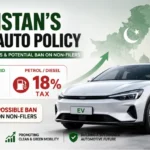
The government has gone to efforts to reverse the situation with the NEV Policy 2025-30. The goal is to have 30% of all new car sales electric vehicles by 2030. The policy is expected to save Rs. 538 billion through reduced fuel imports and cut 4.5 million tonnes of carbon emissions. The demand exists provided the conditions are right, as EV sales in Pakistan increased to 191% in 2025, and a total of approximately 90,000 models were sold.
Pakistan is also one of the countries more vulnerable to the impact of climatic changes, floods, heat waves, crop failures etc. Cleaning up transport emissions is no box to be checked on the global responsibility list. It’s about securing the nation’s future.
What’s the Decision?
EV cars are a real solution for the environment, but not the magic one. The battery supply chain must clean up its act. A transformation towards renewables will be needed in the electricity grid. The infrastructure required for recycling the batteries must be able to keep pace with the number of batteries that need to be replaced.
Overall, during a vehicle’s entire lifespan, an EV would be better for the environment than a petrol car. As technology advancements keep growing and grid clean-up keeps improving, that gap continues to grow annually.
Thinking about Making a Switch?
For those interested in EV vehicles in Pakistan, FameWheels has an expanding selection of new and used electric vehicles listed throughout Pakistan, including BYD, MG and more. Before deciding, all the information about the value of the vehicle, including inspection reports and financing options, can be found in one place.
Conclusion
Certainly, electric cars are indeed, eco-friendly but there are a lot of things that need to change before Pakistanis can completely make a switch. Over their lifetime of a vehicle they outperform petrol cars significantly, in terms of emissions, running costs and air quality. For Pakistan, the objective of having the right EVs is not only environmental. It’s an economical one.