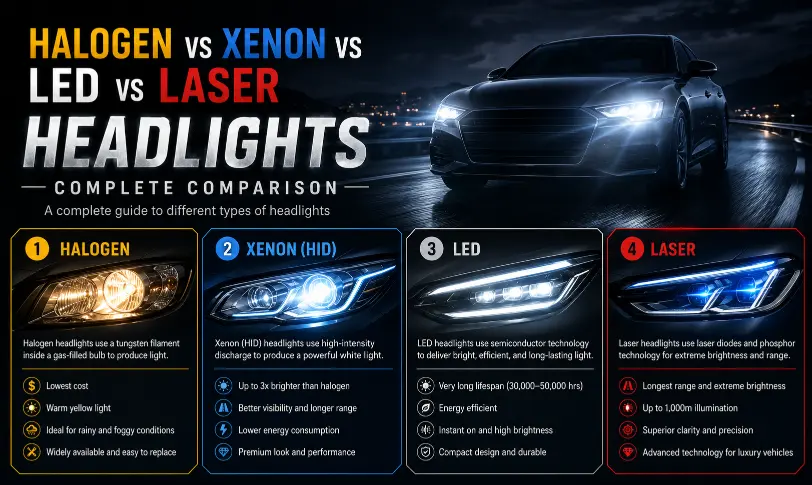

Are you considering a purchase of headlights for your vehicle? Here is a guide comparing all four types of headlights for your understanding. Most commonly used headlights on the roads are halogens. However, others include Xenon (HID), LED, and laser. It is important to note that they all have their pros and cons.
Comparison of Key Features
| Feature | Halogen | Xenon (HID) | LED | Laser |
| Lifespan | 500–1,000 hours | 2,000–3,000 hours | 30,000–50,000 hours | 30,000–50,000 hours |
| Energy Efficiency | Low | Better than halogen | Up to 10x more efficient than halogen | Uses 2/3 of LED power |
| Warm-up Time | Instant | 2–5 seconds to full brightness | Instant | Instant |
| Brightness Level | Yellow-white light | Up to 3x brighter than halogen | Very bright white light | Extremely bright (up to 600m range) |
| Typical Cost in Pakistan | Cheap | Affordable | Moderate | Expensive |
Halogen Headlights
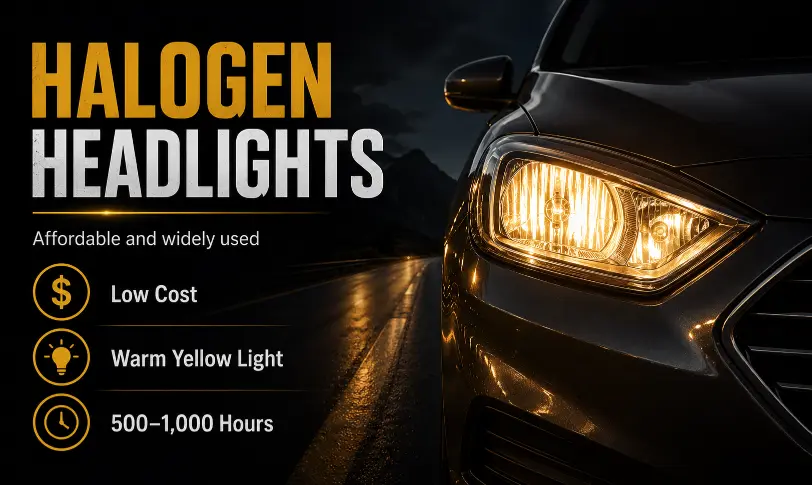
Road lights today are primarily halogen. They work on the principle of passing an electrical current through a tungsten filament within a bulb containing a glowing halogen gas.
Pros: The production and replacement costs of halogen bulbs are the lowest. They come in various sizes and can fit in most cars. The warm yellow colour is good in rainy and foggy conditions.
The downside: Halogen lamps have a short lifespan of 500-1,000 hours. They are the least efficient and create more heat, which leads to a loss of energy. The light output is less than that of newer technologies, and the bulb can easily be broken. These are gradually discontinued and replaced by the more efficient choice.
Xenon HID Headlights
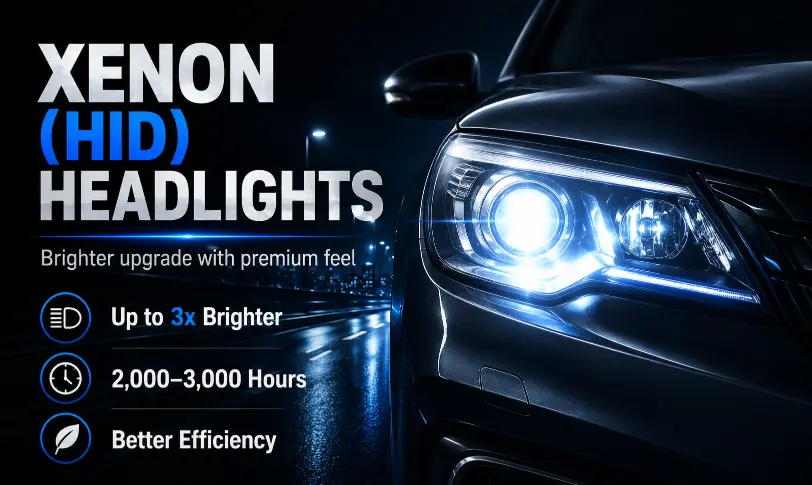
Xenon or High-Intensity Discharge (HID) headlights are different, and they carry no filament that can burn out. It has a longer lifespan than halogen lights.
Advantages: Xenon HID lamps produce a much whiter light and are 3 times brighter than the halogens. They vary in the range of 2000 to 3000 hours and are more energy efficient than halogens. The bluer light (more like natural daylight) increases visibility and reduces glare when driving at night. Plus, they have a quality appearance that is typically included in luxury cars’ names.
Problems: Xenon bulbs are more expensive than halogens, and a system must be in place to wash the Xenon light before dust will reflect. This lamp comes in at a high voltage and could cause glare if it isn’t installed correctly; professional installation is suggested.
LED Headlights
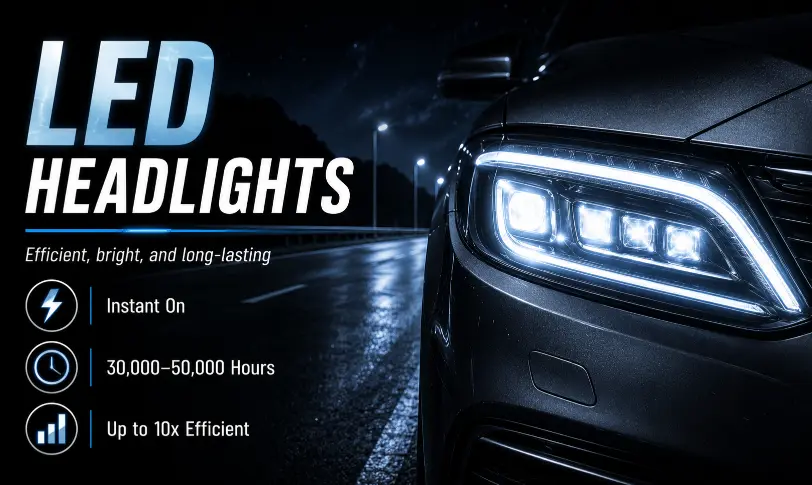
The LED (Light-Emitting Diode) headlights use a semiconductor material, which directly emits light through electroluminescence. Eliminate the wait for warm-up time, filament, and gas cost.
Pros: The lifetime of LED headlights is from 30,000 to 50,000 hours; they last longer than the life of the car itself. They burn up ten times less than halogen light bulbs. Also, they can be used in the very limited space of vehicles for innovative and flexible design and can be installed in arrays to create matrix lights and switch beams. Lighted Headlights offer bright white light for improved visibility.
Pros: LED headlights are more expensive than halogen or HID. These need cooling systems to control heat generated at the bottom of the emitter, and can make maintenance difficult. The modern replacement of a complete LED headlight for a car is extremely expensive. Using LED bulbs in reflectors not intended for use with them can result in dark spots and glare.
Laser Headlights
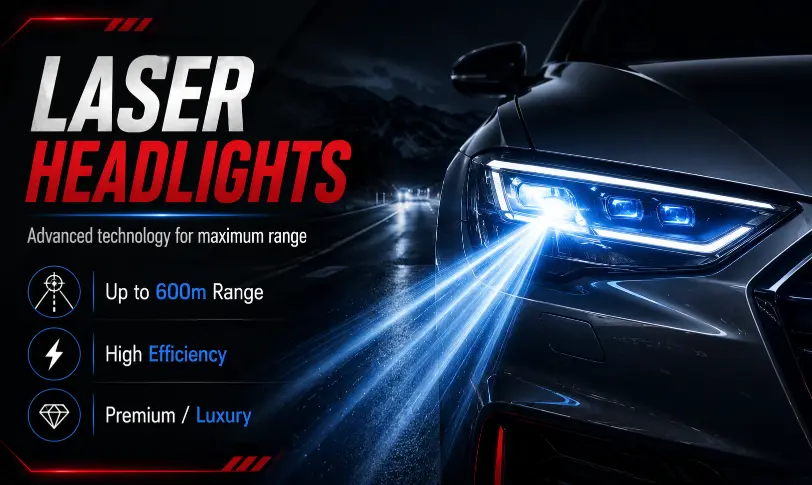
The most recent and most advanced are laser headlights. They work with blue light being directed from the headlight towards a mirror, which has the phosphor coated on the inside. It reacts, making an intensely yellow light (but the blue light will also be present and visible to the human eye). This laser has no function as a road lighting system.
Advantages of laser headlights: In certain designs, laser lights cast up to 1,000 times more light than LED lights. Additionally, they provide pure white light, more like natural daylight, and can illuminate up to 600 metres in front (roughly twice the distance of a standard headlight beam). They are also energy efficient and use less energy than LEDs. Moreover, they come in a variety of designs and are built with high quality stuff.
Disadvantages: The main disadvantage is the cost. Luxury vehicles like the BMW and Audi are the only models that come with this as standard. They are forbidden to work in some markets, and only expected to work to 100% capacity in others. They also emit more heat than LEDs, which also need additional cooling. Laser lights are unaffordable for the average Pakistani consumer when it comes to going for a ride.
Conclusion
Even if you either have a budget constraint or are driving an older car, halogen headlights remain the most affordable and popular light type. The Xenon HID will be a great intermediate option to enhance performance and efficiency. Entertaining led headlights offer the brightest, energy efficient and long-lasting illumination in new automobiles. The highest performing headlights are laser lights, which are only available on high-end vehicles.