
The fuel prices in Pakistan are at a new high, and the owners are seeking smarter options. This is where Electric Vehicles spring in.
In a simple manner, an EV uses battery electricity as opposed to petrol or diesel. However, on top of this buzzword, most individuals would like to understand how electric cars work before they make the switch.
Does it have complex technology? Can Pakistani roads handle it? It is an article that dissects all that comes up to the motor and battery system and the advantages and obstacles associated with the ownership of an EV in Pakistan in the present times.
What Is an Electric Vehicle?
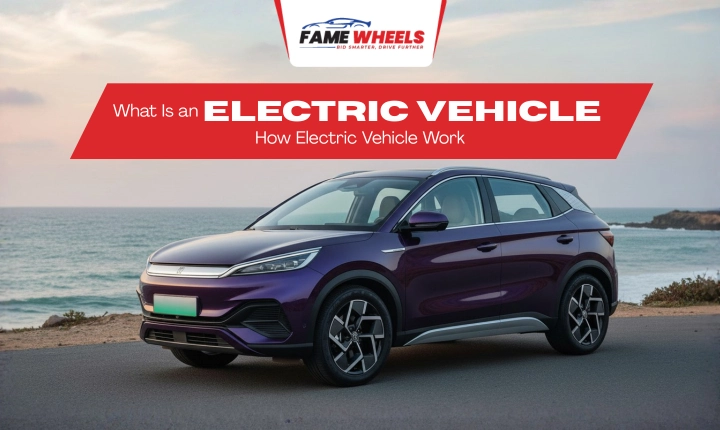
An electric vehicle is a car that uses electricity as a source of power, either completely or partially. The EVs operate using rechargeable battery packs to store energy, whereas traditional cars burn fossil fuel in an internal combustion engine to propel the wheels.
The most widespread model that you will hear about is the Battery Electric Vehicle (BEV) that uses only electricity and produces no tailpipe emissions. Hybrids, which are a mix of a small engine and an electric motor, also exist.
Whenever individuals refer to the next stage of mobility in Pakistan, they are likely referring to full electric vehicles. These cars do not emit any exhaust, they do not require any fueling, and they provide a smooth ride experience without much noise.
For Pakistani customers fed up with fluctuating fuel costs, the question of what an electric car can really give them is the first step to smarter transportation.
How Electric Cars Work?
Electric cars are not as difficult to understand as many may believe. An EV has three main components that collaborate, rather than a fuel-burning engine:
- The battery pack is a kind of electricity storage (similar to a big smartphone battery).
- The controller acts as the brain of the system that determines the amount of power that is sent out of the battery to the motor, depending on how hard you are pressing the accelerator.
- The electric motor converts that electricity into mechanical energy, rotating the wheels to move the car.
As you lift your foot off the accelerator, the motor switches itself back and behaves like a generator, putting power back into the battery. This is regenerative braking. This renders EVs more effective compared to traditional cars.
EV Motor and Battery System Explained
Introduction to understanding electric mobility. You must know how EV motors and battery systems work.
The majority of contemporary EVs utilize a lithium-ion battery pack, which is the equivalent of laptops but in a car format. These batteries contain direct current (DC) electricity. But the motor runs on alternating current (AC). The inverter changes DC into AC and regulates the speed of the motor.
In Pakistan, charging is done either at home using a typical outlet (slow charging overnight) or at charging emergency stations in large urban areas.
The vehicle is designed to live up to a battery life, with most manufacturers having an eight-year warranty or more. EV batteries and motors are very long-lasting and have fewer moving parts as compared to a petrol engine, therefore, less wear and tear over time.
Primary Electric Vehicle Components
Dividing the key electric vehicle components makes the tech seem not-so-mysterious:
- Battery Pack: the energy storage, typically beneath the floor, to have a low center of gravity. It dictates your range of drives.
- Electric Motor: changes electrical energy into mechanical motion to rotate the wheels. Mostly, AC motors are used in the quest for efficiency.
- Power Controller: the brain, which controls the power flow between the battery and motor regarding any driver input.
- Charging Port: This is the place where you plug in to charge, and it is usually at the location of a fuel door.
- Regenerative Braking System: harnesses energy when decelerating and sends it to the battery, increasing range.
All the parts are in concert in providing a smooth, responsive, and shockingly easy driving experience. An EV powertrain is beautifully simple, which is a contrast to engine cars with numerous moving components.
Advantages of EV in Pakistan
Why should EVs be considered in Pakistan? The benefits are overwhelming:
- Saving fuel consumption: since petrol prices are variable, charging an EV will be very inexpensive per kilometer. Electricity is cheaper.
- Reduced Maintenance: no engine oil, spark plugs, timing belts, or exhaust system. Only rotating tires and brake inspection.
- Environmental Impact: Pakistani cities have air pollution. EVs are zero tailpipe emissions, which contribute to the reduction of smog.
- Government Incentives: EV imports attract reduced customs duties, but the infrastructure continues to develop.
- Smooth Driving Performance: Instant torque means fast acceleration. No gear changes, no motor buzz, only silent strength.
- Energy Independence: become less dependent on foreign oil. Bill for locally-generated electricity.
With the rising prices of petrol and the rise in charging networks, the EV value proposition increases among many Pakistani drivers.
Is the Electric Vehicle a Future in Pakistan?
It’s a fair question. Charging systems are insufficient, and long-distance commuting must be planned.
Nevertheless, the situation is changing, and the Pakistani market is seeing new EV models. The car manufacturers are investing in local manufacturing, and the charging stations are gradually appearing in Islamabad, Lahore, and Karachi.
Although the change will not occur immediately, the trend is obvious. Increasing numbers of Pakistanis are getting to know how electric cars operate, and early adopters already have lower running expenses.
Infrastructure investment is the future; however, there is a growing momentum.
Conclusion
Concisely, electric cars use battery-stored electricity rather than petrol, which is a cleaner, quieter, and more efficient method of travel.
The concept of how electric cars operate demonstrates that the system is incredibly simple: the battery stores power, the controller regulates the flow, and the motor rotates the wheels. EVs offer the Pakistani consumers a promising option, who are sick of the fuel price fluctuations. The future is electric, and the technology is here; the advantages are tangible, and the benefits are not a silent secret. Keep visiting FameWheels for future updates.
FAQs
Time to charge depends on the type of charger. An average domestic plug can fully charge within 8-12 hours, which is suitable for overnight charging. Public chargers with DC are available and can charge a battery 80-percent in 30 to 60 minutes, which is perfect as a roadside top-up.
Import duties and battery prices make EVs typically more expensive initially than petrol cars. The price is going down with government incentives, including low customs duties.
The majority of EVs have a life span between 8 and 10 years or 150,000 kilometres, and the manufacturers offer a warranty for that time.
No, electric cars do not require any oil change as they have no internal combustion engine. No engine oil, oil filter, or timing belt to change.
Yes, EVs are designed with an extensive battery pack and electrical waterproofing. They are thoroughly tested to make sure they can be used during heavy precipitation and on overflooded roads.