
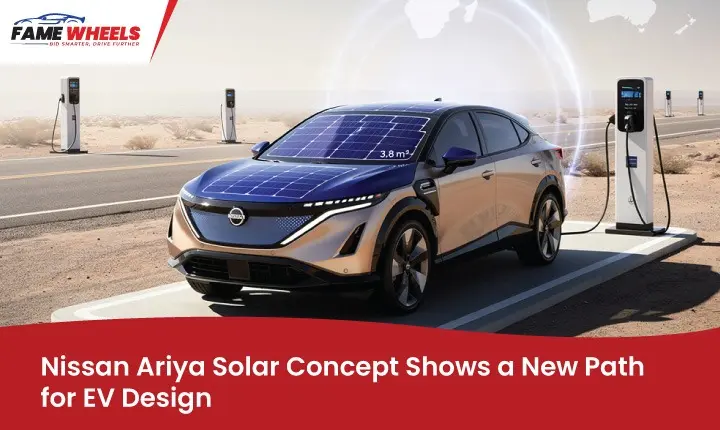

The Nissan Ariya Solar Concept, a future that sees for electric vehicles (EVs). With many drivers now looking for cleaner, greener alternatives, this revolutionary concept car has reinvented the wheel and integrated solar power into its design to provide a glimpse of how electric cars can be made into more energy-efficient machines.
What Is So Special about the Nissan Ariya Solar Concept?
The Nissan Ariya Solar Concept’s solar panels are unlike those in outdated solar cars that stick out from the car body, instead, they lie seamlessly flush with the roof surface. This flush look complements the car’s sleek appearance and has no impact on aerodynamics. Integrating solar energy capability in the last design of a car, The Nissan EVs are good news and may open ways for future cars.
How the Solar Concept EV Car Functions
The solar panels on the Nissan Ariya Solar Concept do not fully charge the car, but provide support for its onboard systems and can contribute small amounts of range over time. While the system can’t provide all of the car’s power, it produces enough power to maintain daily driving needs in sunny conditions.
Solar roof. Under optimal conditions (which will rarely, if ever, occur because it’s almost never sunny enough), in sun-soaked locales such as Pakistan, the concept model’s solar roof could add up to 23 kilometers of range per day. This reduces charging frequency and minimizes energy use. Nissan Solar EV lets owners reduce and control their usage charges by parking or driving in the sun, which is good news for cities with abundant sunshine, like Karachi, Pakistan.
Nissan Ariya Environmental and Practical Benefits
By incorporating solar panels into the EV design, dependence on charging infrastructure can be reduced by as much as 65%, making it viable in regions where charging facilities are currently under development. In addition to affordability, Nissan’s Solar EV provides the environmental benefits of decreased dependence on outside sources for charging, reduced emissions, and a greater opportunity to enjoy sustainable mobility.
In a sun-soaked place like Karachi and other urban areas as extensive as Karachi in Pakistan, solar generation technology is proving it, driving down costs and making EVs more practical.
Conclusion
More than just a futurist concept, the Nissan Ariya Solar Concept represents a physical appearance of Nissan’s energy philosophy and adds to its efforts to apply CO2-reduction techniques. If the technology continues to advance and remains cost-effective, it may also make its way into future Nissan EV cars, redefining what we know about electric mobility.
Frequently Asked Questions
Add Solar Charging. The Nissan Ariya Solar Concept also features solar panels built into the roof of the vehicle. This touch could help power some in-vehicle systems and add a bit of range, without ruining the car’s looks or affecting aerodynamics.
No, the solar panels are to help power systems on board and provide extra range. These are not supposed to be the car’s main power supply.
In perfect condition, your solar system can provide up to 23km of additional driving range per day based on the sunlight availability and usage.
In Pakistan, a country rich in sunshine, solar panels can help minimize charging demands, make EVs more financially viable to operate, and provide a vehicle that makes sense for daily use in urban centers like Karachi.
According to Nissan, the concepts behind the Ariya Solar Concept may impact future production cars, particularly as solar technology becomes more efficient and cheaper.